
Steven Spielberg’s Disclosure Day Is The Conclusion Of 49-Year Unofficial Sci-Fi Trilogy
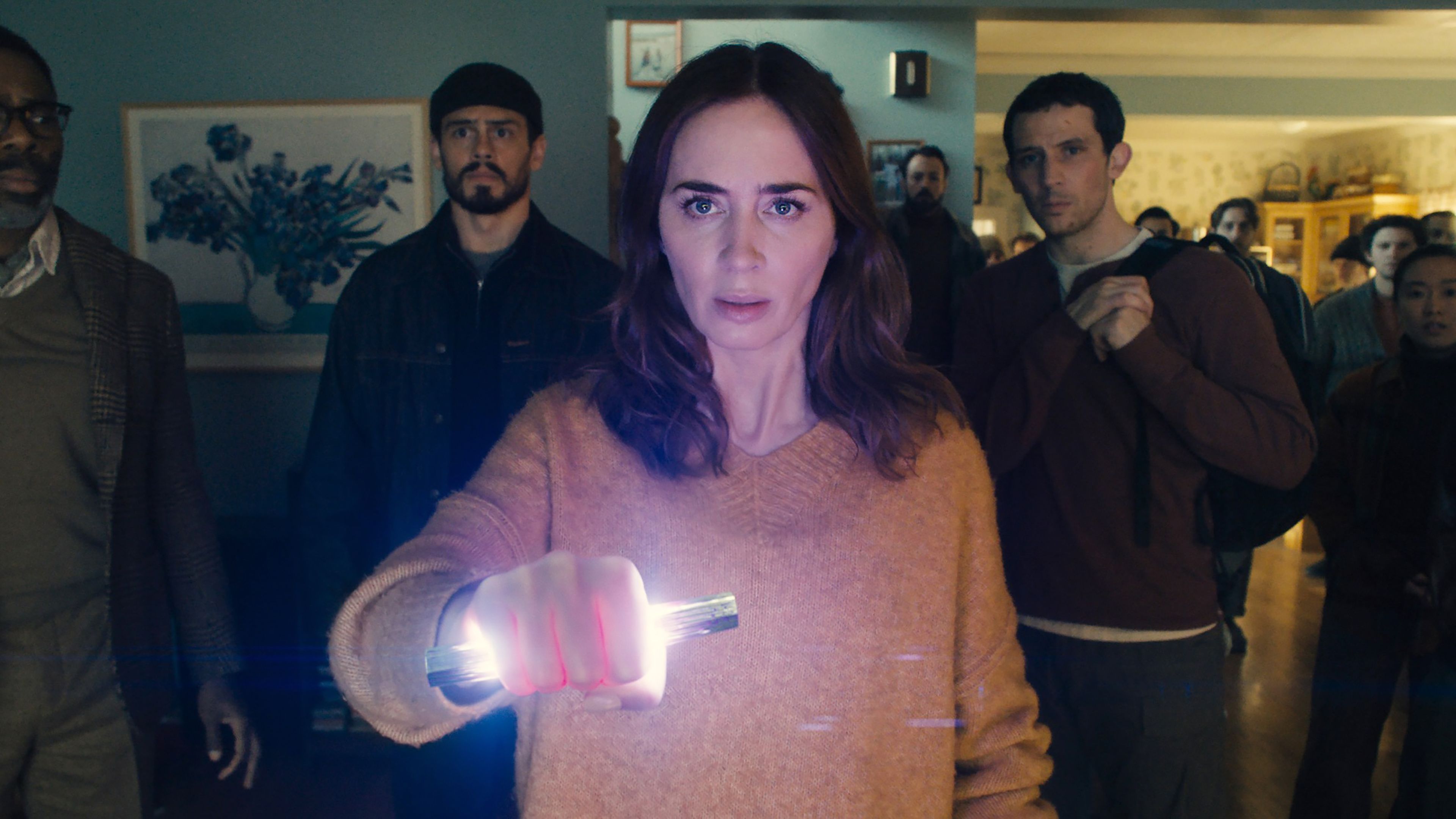
Steven Spielberg has returned to the world of extraterrestrial storytelling with Disclosure Day, which he views as the conclusion of his unofficial sci-fi trilogy. Reuniting with frequent collaborator David Koepp, the new film centers around cybersecurity expert Daniel Kellner, who discovers the truth about aliens’ involvement on Earth for decades and decides to release all of the information to the world. Around the same time, meteorologist Margaret Fairchild begins experiencing a series of strange occurrences potentially connected to the aliens, putting them on a collision path to learn more about their past as they seek to share the truth. Ahead of the film’s release, ScreenRant’s Liam Crowley interviewed Steven Spielberg to discuss Disclosure Day. When asked about the theories of his prior alien sci-fi films, Close Encounters of the Third Kind and E.T. the Extra-Terrestrial, being connected as part of an unofficial trilogy, the three-time Oscar winner began by acknowledging the former as being “my first foray into confronting a huge event that would change the world if known by the world,” that being “the first time an advanced off-world civilization appeared to us and started communicating with us.” Recalling his experience with the Oscar-winning film as being “thrilling to be able to have that in my life,” the director went on to express that “nobody knows about” the classification of alien encounters apart from “the audience that sees the movie,” which he also says “was not a disclosure.” As such, where Close Encounters and E.T. could be seen as the first two acts, Disclosure Day is “my summation film” of his unofficial trilogy:
Steven Spielberg: It was a very well-kept secret. But with the whistleblowers that came forward starting in 2017 and even before that, with all the testimony about people saying things are happening, and whoever has the archive of the truth is not disclosing it to anybody, I started getting really interested in what I would call my summation film. The first act in Close Encounters, the second act ET, which was a very insulated, very, very insulated story, a suburban story. And then finally, Disclosure Day was finally, unlike Devil’s Tower and that meeting of the minds, finally the truth is there for all of us to behold.
While he has tackled a variety of genres throughout the years, the sci-fi genre is still what Spielberg is most often associated with, thanks in large part to Close Encounters of the Third Kind’s massive success on the heels of his breakthrough with Jaws and record-breaking E.T.. Though Disclosure Day is being seen by some as the third part of his unofficial sci-fi trilogy, he did also return to the alien-focused subgenre with his adaptation of H.G. Wells’ War of the Worlds and Indiana Jones and the Kingdom of the Crystal Skull.
To Spielberg’s point, Disclosure Day does mark an understandable extension of his work on Close Encounters and E.T.. The 1977 classic mixed the elements of humanity’s awe of all things alien with the government’s desire to keep things under wraps from the public, while the 1982 film was more about the idea of the public being willing to embrace and learn more about other intelligent species. His latest film, on the other hand, really aims to tear the wall down on all of the government’s secret-keeping about aliens to allow the world to decide how they want to live their lives knowing aliens do indeed exist. Considering many of Spielberg’s films have a sense of hope underlying even some of the most harrowing of topics, it does seem likely Disclosure Day will lean more toward the side of humanity being both okay and intrigued at learning more of extraterrestrials’ existence.
Reel 1 of 1 · 35mm
How Well Do You Know Steven Spielberg?
“You’re gonna need a bigger boat.”
JawsSmile, you son of a…
E.T.Phone home
IndianaJonesBelongs in a museum
JurassicParkHold on to your butts
SavingRyanEarn this
ROLL FILM →
01
Jaws (1975) invented the summer blockbuster — partly because the three pneumatic sharks built for the shoot kept malfunctioning in Martha’s Vineyard’s salt water, forcing Spielberg to keep the creature offscreen. What nickname did the crew give the mechanical shark?
ABruce
BChompers
CMoby
DThe Orca
✓ Correct! Bruce — named after Spielberg’s lawyer, Bruce Ramer. Three 25-foot hydraulic sharks were built for about $250,000 each, and they kept sinking, shorting, and rusting. The forced minimalism (Williams’ dun-dun cue, a bobbing barrel, a ripple on the water) is now credited with making Jaws scarier than any visible shark could have. Pixar later named the shark in Finding Nemo “Bruce” as a tribute.
✗ Cut! The answer is Bruce — after Spielberg’s lawyer Bruce Ramer. “The Orca” was Quint’s boat. “Moby” and “Chompers” are red herrings. The three real hydraulic sharks kept breaking down so badly that Spielberg hid the shark for most of the film, which paradoxically became the masterstroke that invented modern suspense cinema.
NEXT →
02
In E.T. the Extra-Terrestrial (1982), Elliot lures the stranded alien out of the forest with a trail of candy. In one of film history’s most famous product-placement coups, Mars Inc. turned down the M&M’s offer, so Hershey’s swooped in — and sales of which sweet jumped around 65% overnight?
ASkittles
BReese’s Pieces
CMilk Duds
DTwizzlers
✓ Correct! Reese’s Pieces. Hershey’s paid roughly $1 million in promotional tie-ins (no upfront placement fee, but they agreed to run an E.T. marketing campaign) and watched sales explode as the film ran through summer 1982. It remains the textbook case taught in business schools for how screen placement can remake a product overnight. E.T. became the highest-grossing film of all time until Spielberg’s own Jurassic Park dethroned it in 1993.
✗ Cut! The answer is Reese’s Pieces. Mars Inc. turned down the M&M’s offer, reportedly because executives thought the alien was too ugly to associate with the brand — a decision they must have regretted all summer. Hershey’s took the deal, did about $1M in tie-in marketing, and saw Reese’s Pieces sales jump around 65%. It’s still the gold-standard case study in product placement.
NEXT →
03
Raiders of the Lost Ark (1981) nearly starred a different leading man. He’d already screen-tested with Karen Allen and signed on, but CBS refused to release him from his TV contract, so Harrison Ford was cast roughly three weeks before shooting. Who was the original Indy?
ATom Selleck
BBurt Reynolds
CNick Nolte
DJeff Bridges
✓ Correct! Tom Selleck — locked in by CBS for Magnum P.I., which the network refused to delay. To twist the knife, a writers’ strike then pushed Magnum’s start back anyway, meaning Selleck would have been free in time. Harrison Ford (already Han Solo for George Lucas) stepped in late, and the rest is cinema history. Selleck has joked about it on every late-night circuit for 40 years.
✗ Cut! The answer is Tom Selleck. He had the part and the test footage with Karen Allen still exists. CBS wouldn’t let him out of Magnum P.I. — a writers’ strike then delayed the TV show anyway, which is the great “what if” of his career. Lucas and Spielberg turned to Harrison Ford, already lined up for Empire Strikes Back, just three weeks before Raiders began principal photography.
NEXT →
04
Close Encounters of the Third Kind (1977) climaxes at Devils Tower as scientists greet the alien mothership by exchanging a five-note musical phrase — possibly the most famous handful of notes ever written for a film. The long-time Spielberg collaborator who composed it is…
AJerry Goldsmith
BJohn Williams
CHans Zimmer
DJames Horner
✓ Correct! John Williams — Spielberg’s collaborator on nearly every film he’s made since The Sugarland Express in 1974. Williams reportedly tried hundreds of five-note combinations before Spielberg signed off on the Re-Mi-Do-Do-Sol sequence. Williams has five Oscars, 50-plus nominations, and his Spielberg credits include Jaws, E.T., Indiana Jones, Jurassic Park, Schindler’s List and more.
✗ Cut! The answer is John Williams — the only composer Spielberg has really used across his career. Jerry Goldsmith scored Alien and Poltergeist. Hans Zimmer is the Nolan guy. James Horner did Titanic and Avatar. Williams alone has scored nearly every Spielberg film since 1974 and personally wrote the five-note Close Encounters motif after trying hundreds of alternatives.
NEXT →
05
Jurassic Park (1993) was adapted from a 1990 novel whose author insisted on writing the first screenplay draft himself. Spielberg paid $1.5 million for the rights before the book was even published. Who wrote it?
AStephen King
BTom Clancy
CMichael Crichton
DJohn Grisham
✓ Correct! Michael Crichton — the Harvard-trained physician-turned-novelist who also wrote The Andromeda Strain, Congo, Sphere, Disclosure and Rising Sun, and created ER. He sold Jurassic Park to Spielberg pre-publication. David Koepp rewrote Crichton’s draft into the film’s shooting script. The novel and film were such a phenomenon that Crichton wrote a sequel, The Lost World, explicitly because Spielberg asked for one.
✗ Cut! The answer is Michael Crichton. He wrote the novel in 1990, Spielberg bought the rights pre-publication for $1.5M, and Crichton did the first screenplay draft before David Koepp took it over. Crichton also created ER and wrote Andromeda Strain, Congo, Sphere, Disclosure and more. Stephen King, Clancy and Grisham are all bestsellers of the same era, but Jurassic Park is pure Crichton.
NEXT →
06
After a decade of being nominated and shut out by the Academy, Spielberg finally won his first Best Director Oscar in March 1994. The film — shot in Poland, mostly in black and white — also won Best Picture. Which one was it?
AThe Color Purple
BEmpire of the Sun
CSchindler’s List
DAmistad
✓ Correct! Schindler’s List — which swept the 1994 Oscars with seven wins, including Best Picture and Spielberg’s first Best Director statue. He famously shot it in 72 days for about $22 million in parallel with prepping Jurassic Park, and took no salary. He’d later win a second Best Director for Saving Private Ryan (1998). The Color Purple went 0-for-11 at the Oscars in 1986 — one of the most notorious snubs ever.
✗ Cut! The answer is Schindler’s List. The Color Purple (1985) got 11 nominations and won zero. Empire of the Sun (1987) went home empty too. Amistad (1997) was respected but not a Best Director winner. Schindler’s List won seven Oscars in 1994 — Best Picture, Best Director and more — finally breaking Spielberg’s decade-long Academy drought.
NEXT →
07
Saving Private Ryan (1998) opens with a harrowing, nearly 24-minute combat sequence that veterans described as the most realistic war footage ever put on film. Which June 6, 1944 landing does it recreate?
AIwo Jima
BSword Beach
COmaha Beach
DOkinawa
✓ Correct! Omaha Beach — the bloodiest of the five D-Day sectors, where US forces took catastrophic casualties in the opening hours. Spielberg filmed the sequence on Curracloe Strand in Ireland with around 1,000 extras, desaturated the film stock, and removed the protective shutters from cameras to capture that signature jittery, hand-held look. The Ryan opening is routinely voted one of the greatest battle scenes in film history.
✗ Cut! The answer is Omaha Beach. Iwo Jima and Okinawa were Pacific, 1945. Sword Beach was the British D-Day sector. Omaha was the bloodiest of the Normandy landings, and it’s where Spielberg’s shaky-cam, desaturated, shutter-stripped sequence is set — shot on Curracloe Strand in Ireland with about 1,000 extras, many of them Irish Defence Forces reservists.
NEXT →
08
In 2022 Spielberg finally told his own origin story — a young Jewish boy named Sammy who falls in love with filmmaking, watches his parents’ marriage fracture, and learns that a camera can both reveal and lie. Michelle Williams got an Oscar nom for playing the mother. What’s the film called?
AThe Fabelmans
BAmblin
CYoung Spielberg
DReel Life
✓ Correct! The Fabelmans — co-written with his Lincoln and Munich collaborator Tony Kushner. Paul Dano plays the father (based on Spielberg’s engineer dad Arnold), Michelle Williams plays the mother (based on his artist mum Leah) and earned a Best Actress Oscar nom, Gabriel LaBelle plays young Sammy/Steven, and David Lynch cameos as John Ford in the film’s stunning final scene. Seven Oscar nominations in total, including Picture and Director.
✗ Cut! The answer is The Fabelmans. “Amblin” is the name of his 1968 short and his production company, not this film. The Fabelmans (2022), co-written with Tony Kushner, dramatises Spielberg’s New Jersey-to-Arizona-to-California childhood with the family name lightly fictionalised. It earned seven Oscar nominations including Picture, Director and a Best Actress nod for Michelle Williams.
REVEAL MY SCORE →
End of Reel · House Lights Up
Your Director’s Cut
/ 8
Amblin auteur — or still shooting the first act?
PLAY AGAIN
While he may agree with the idea that the new film, Close Encounters of the Third Kind and E.T. are part of an unofficial sci-fi trilogy, it does seem Spielberg only views them as such through a thematic lense, not directly tied. This would make sense given the alien species in all three movies feature very different designs, which would either stem from them being different forms of aliens or, more likely, not connected in any narrative sense.
As he describes the film as being a “summation” of his exploration of extraterrestrial visits to Earth, it’s unclear if Disclosure Day will indeed be Spielberg’s final alien-focused story. Though not quite to the level of E.T. or Close Encounters, the film is garnering largely positive reviews from critics, currently sitting at an 81% “Certified Fresh” approval rating on Rotten Tomatoes. With it also eyeing a $65 million opening weekend, his largest since 2018’s Ready Player One, it could very well prove a worthwhile send-off for his unofficial sci-fi trilogy.
Release Date
June 12, 2026
Runtime
145 Minutes
Cast
Josh O’Connor
Daniel Kellner
Diterbitkan : 2026-06-11 21:23:00
sumber : screenrant.com