

7 X-Men Stories That Are Considered Flawless
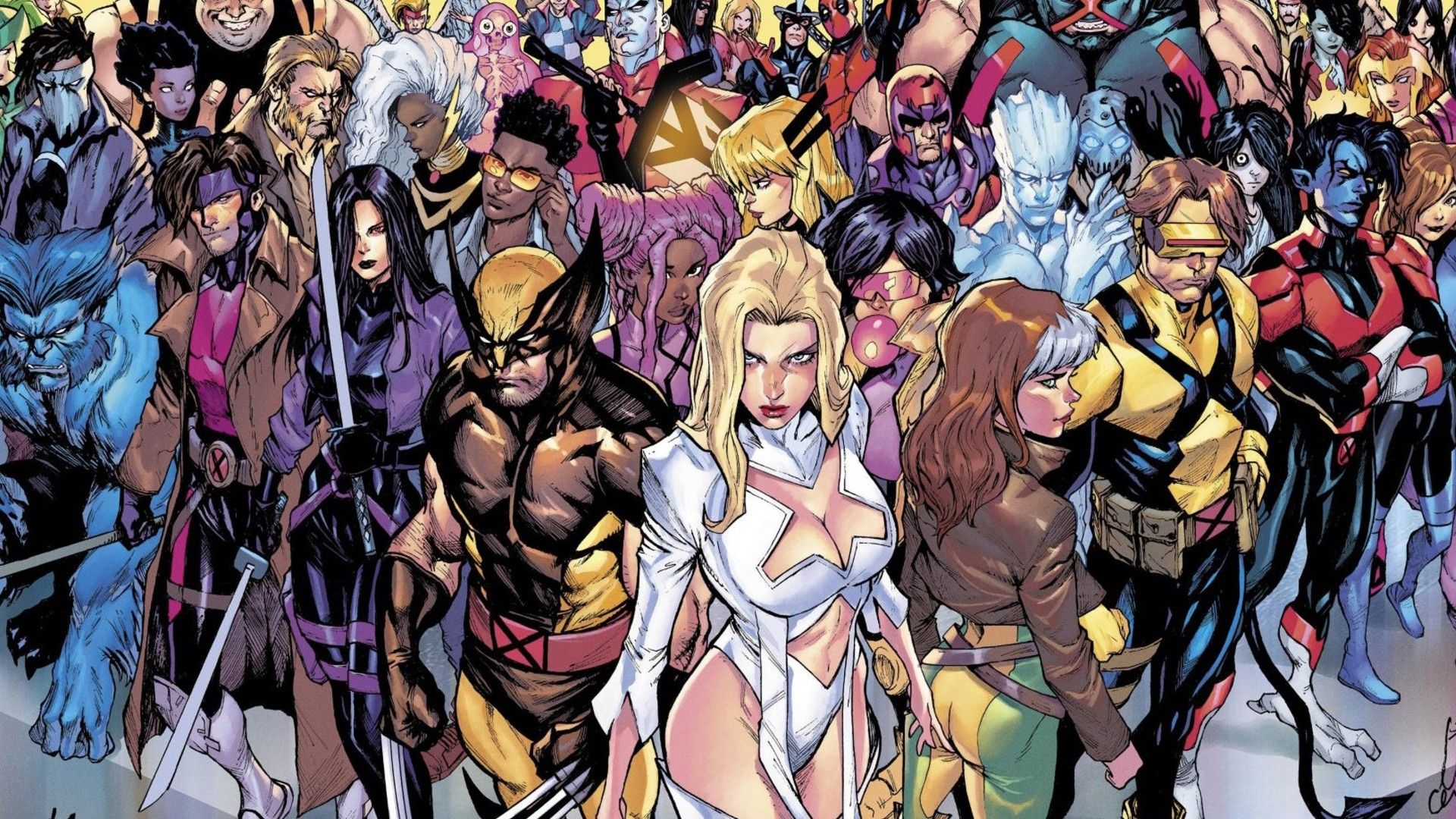
For sixty years, the X-Men have served as Marvel’s perfect allegory for several marginalized groups in society. While the franchise has seen its fair share of convoluted plotlines, its peaks remain the gold standard for the medium. The X-Men circumvent the conventional superhero formula, balancing deeply intimate character drama with high-octane superpowered battles. Among the thousands of issues in the franchise, a select few narratives have achieved the status of untouchable masterpieces, lauded by both critics and fans. All the elements in these stories work in perfect harmony, delivering stunning artwork, strong pacing, and poignant character work that carry the intended thematic weight, setting the benchmark for comic book storytelling. From the tragic epics of the Claremont era to the revolutionary narrative shifts of the modern age, these story arcs have stood the test of time and are widely regarded as flawless works of art. These X-Men stories stand as unassailable masterpieces in a franchise known for compelling narratives with tear-jerking conclusions; these seven stand at the very top.
7
House of X / Powers of X – House of X #1–6 and Powers of X #1–6
House of X and Powers of X in Marvel Comics
Jonathan Hickman transformed the X-Men in House of X and Powers of X by portraying mutants as residents of their own sovereign nation, no longer in hiding. The story shows Charles Xavier and Magneto rallying mutants to live openly on Krakoa, a living island, by trading miracle drugs with human nations in exchange for worldwide sovereignty. The story achieves narrative perfection by spanning multiple timelines across a thousand years in a dual epic, rich in expertly crafted worldbuilding. Featuring the beautiful, cinematic art of Pepe Larraz, this story proves that, sixty years into its history, a franchise can still reinvent itself successfully without sacrificing narrative integrity or quality.
6
Age of Apocalypse – X-Men: Alpha #1 and X-Men: Omega #1
Magneto leading the X-Men in the Age of Apocalypse.
X-Men: Alpha #1 and X-Men: Omega #1 made one of the most daring editorial gambits in comic history and created one of the most iconic comic storylines; Age of Apocalypse is lauded by fans and critics alike today. These framing issues are a masterclass in worldbuilding, managing to tackle a time-travel plot without it becoming a convoluted mess. In the story, a time-travel accident causes Charles Xavier’s premature death, altering the timeline so that the ancient tyrant Apocalypse conquers North America before the X-Men can form. In Alpha, Magneto leads a desperate faction of freedom fighters in a bleak, unrecognizable world, while Omega leads an explosive final stand to save the original timeline. Alpha introduced new, exciting dynamics, presenting a more heroic Sabertooth and a more morally grey Cyclops. At the same time, Omega performs the herculean feat of delivering a heart-pounding, tragic finale that juggles dozens of threads. The story sets the benchmark for line-wide crossover events, proving that they can achieve storytelling perfection when they lean into the premise.
5
Inferno – Uncanny X-Men #239–243
Inferno is a storyline heavily centered on Madelyne Pryor, Scott Summers’s discarded wife, who discovers she’s actually a clone of Jean Grey. When the demon lords S’ym and N’astirh manipulate Magik into opening portals to the demon realm, Madelyne Pryor, driven mad by her deal with demons, transforms into the vengeful Goblin Queen and unleashes hell on Earth. The narrative’s ability to resolve years of heavy emotional baggage with flawless theatrical execution cements its status as a masterpiece. Marc Silvestri’s brilliantly kinetic and haunting pencils create breathtaking art that highlights the story’s dark, surreal atmosphere, as expertly written by Chris Claremont. The narrative serves as a metaphor, a direct, physical manifestation of the characters’ repressed trauma and guilt.
4
Giant-Size X-Men, Giant-Size X-Men #1
Giant Size X-Men Cover
Published in 1975, Giant-Size X-Men #1 played a major role in revitalizing the franchise at a time when it was effectively dead, plagued by low sales and monthly reprints. In this story, Charles Xavier travels the globe, assembling a new team of international X-Men to rescue the original X-Men, who vanished during a mission on the mysterious island of Krakoa. Beyond etching a new, diverse era for the X-Men, this story also introduces fan-favorite characters, including the X-Men lineup. Wein and Cockrum create unique visual identities, rich cultural backgrounds, and compelling power sets that pop off the page, all within a few pages per character, while seamlessly weaving a globe-trotting recruitment tour with a high-stakes rescue mission. This story is representative of the most successful and impactful rebirth in comic book history. It retired the old status quo, replacing a small group of white American teenagers with a more diverse lineup of X-Men from around the globe. This run laid the foundation for the multi-decade run that Chris Claremont would inherit, cementing it as a masterpiece.
3
God Loves, Man Kills – Marvel Graphic Novel #5
The X-Men pose together from the cover of God Loves, Man Kills
God Loves, Man Kills was released in 1982 and delves more deeply into the mutant struggle for survival and acceptance than most other narratives. The story introduces Reverend William Stryker, a charismatic, bigoted televangelist who leads a religious crusade against mutants, labeling them abominations in God’s eyes. When Charles Xavier is kidnapped, the X-Men forge an unlikely alliance with Magneto. The story is deeply honest and doesn’t pull any punches, starting with the gruesome murder of 2 mutant children on a playground. It explores the two approaches of Charles Xavier and Magneto; the latter wants to kill the perpetrators, while the former seeks to debate and reform them. Chris Claremont masterfully mirrors real-world prejudice, religious extremism, and systemic hate. This graphic novel is definitive proof that X-Men stories can tackle deeply unsettling real-life topics with narrative maturity and precision. Brent Anderson’s gritty, grounded artwork sets the story’s grim tone. The final battle isn’t physical but ideological, showing that words and systemic hatred are far more dangerous than any supervillain. This graphic novel is a masterclass in social commentary.
2
Days of Future Past – Uncanny X-Men #141–142
days of future past comic image
Shortly after Jean Grey’s demise, the Days of Future Past storyline depicts a dystopian future in which mutants are interned in camps and hunted by giant Sentinels. To prevent this future, an adult Kitty Pryde projects her consciousness back in time into her younger self’s body, working with the past incarnation of the X-Men to change the future.
The perfection of this story lies in how Chris Claremont and John Byrne managed to deliver a compelling, multi-timeline epic in just two tight issues. This story is a marvel of writing ingenuity, with zero narrative bloat; every panel serves to establish the grim, high-stakes setting while furthering the tension of the present-day assassination plot. Days of Future Past became the gold standard for all comic-book alternate-universe stories that followed, redefining the narrative scope of X-Men stories and offering the possibility that the X-Men might actually lose. The creators perfected a balancing act, executing a time-travel plot with haunting precision while keeping the personal stakes by framing it through Kitty Pryde’s lens, X-Men’s youngest member.
1
The Dark Phoenix Saga – Uncanny X-Men #129–137
Jean Grey as Dark Phoenix in the cover of X-Men
The Dark Phoenix Saga is one of the most iconic storylines in comic book history, created by Chris Claremont and John Byrne, detailing the corruption and ultimate downfall of Jean Grey. After absorbing a cosmic entity, Jean Grey falls under the control of Mastermind and the Hellfire Club. When she breaks free of the manipulation, she becomes the “Dark Phoenix”. Overcome by her unchecked hunger and mental instability, she consumes an entire star, culminating in a final battle with Dark Phoenix on the Moon. This storyline also marks the debut of fan-favorite X-Man Kitty Pryde. The arc delivers flawless pacing and gut-wrenching emotional stakes that underpin the cosmic destruction, culminating in a somber conclusion that completely shifts the status quo. Jean’s slow descent from the infallible X-Man she was to the morally depraved Dark Phoenix was a blueprint for building suspenseful, slow-burn tension. The comic swapped out typical comic-book action for a heavy focus on the devastating heartbreak of Cyclops and the rest of the team as they realize that saving the universe means losing a cherished loved one.
Movie(s)
X-Men (2000), X2, X-Men: The Last Stand (2006), X-Men Origins: Wolverine (2009), X-Men: First Class (2011), The Wolverine (2013), X-Men: Days of Future Past (2014), Deadpool (2016), X-Men: Apocalypse (2016), Logan (2017), Deadpool 2 (2018), Dark Phoenix (2019), The New Mutants, Deadpool & Wolverine (2024)
TV Show(s)
X-Men: Pryde of the X-Men, X-Men (1992), X-Men: Evolution (2000), Wolverine and the X-Men (2008), Marvel Anime: Wolverine, Marvel Anime: X-Men, Legion (2017), The Gifted (2017), X-Men ’97 (2024)
Video Game(s)
X-Men: Children of the Atom (1994), Marvel Super Heroes (1995), X-Men vs. Street Fighter (1996), Marvel Super Heroes vs. Street Fighter (1997), Marvel vs. Capcom (1998), X-Men: Mutant Academy (2000), Marvel vs. Capcom 2: New Age of Heroes (2000), X-Men: Mutant Academy 2 (2001), X-Men: Next Dimension (2002), Marvel vs. Capcom 3: Fate of Two Worlds (2011), Ultimate Marvel vs. Capcom 3 (2011), X-Men Legends (2005), X-Men Legends 2: Rise of Apocalypse (2005), X2: Wolverine’s Revenge (2003), X-Men (1993), X-Men 2: Clone Wars (1995), X-Men: Mutant Apocalypse (1994)
First Film
X-Men (2000)
Diterbitkan : 2026-07-13 23:30:00
sumber : screenrant.com