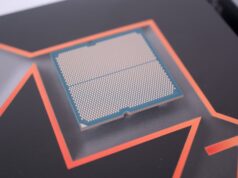

What Intel Firefly actually means for Windows laptops (and why it’s not just another processor)
Intel announced Firefly ahead of Computex and went into more detail on the new project during the technology event. At first glance, it may sound like Intel simply wanting to go a step further from existing architectures and launch something similar to Apple silicon with tighter integrations, phone-style components, higher efficiency control, and thinner systems. But it’s much more than that, especially for portable devices. Intel brought about the Ultrabook to try to create a class of product, and the company is planning to do the same, but this time focusing on making Windows-powered laptops cheaper, thinner, and more standardized.
What is Intel Firefly?
Apple silicon running Windows on laptops
Apple changed the game with the first M-series chip. Apple’s wrapping up its relationship with Intel was two-fold. First, it allowed the company to make almost everything in-house with tighter control over every aspect. Secondly, it brought about vastly more efficient, quiet, and powerful systems with very few drawbacks other than using the Arm architecture, specifically Reduced Instruction Set Computing (RISC). It wasn’t just making a CPU, but more of a System on a Chip (SoC) with tightly packed and connected components. Custom silicon came with integrated graphics, unified memory, and major improvements. Intel Firefly appears to be Team Blue’s move to mirror what Apple went alone to achieve. So, one has to question whether Intel wants to bring Apple’s style integration to Windows? It’s not quite black and white. Snapdragon already offers a SoC platform for Windows on Arm. This isn’t anything new, but Intel Firefly’s going further. The overarching goal is to make more affordable Windows laptops feel less cheap, which isn’t something that correlates with price. Apple itself proved this with the MacBook Neo, which is affordable compared to Windows laptops and yet offers a premium computing experience.
Quiz
8 Questions · Test Your Knowledge
What does Intel Firefly mean for PCs?Trivia challenge
Think you know Intel’s bold plan to run Apple silicon on Windows devices?
Put your knowledge to the test.
IntelApple SiliconHardwareWindowsEmulation
Begin
What is the codename of Intel’s project aimed at enabling Apple silicon
compatibility on Windows devices?
AProject PhoenixBIntel FireflyCIntel ChimeraDProject Crossover
Correct! Intel Firefly is the internal project name for Intel’s effort
to bring Apple silicon compatibility to Windows laptops and other devices. The project represents a
significant cross-architecture ambition from the chipmaker.
Not quite — the correct answer is Intel Firefly. Intel Firefly is the
codename for this ambitious project, which aims to bridge Apple’s ARM-based silicon with the Windows
ecosystem in a novel way.
Continue
Which Apple chip architecture does Intel Firefly primarily target for compatibility
on Windows hardware?
AIntel Core UltraBAMD RyzenCApple M-series ARM chipsDQualcomm Snapdragon X
Correct! Intel Firefly targets Apple’s M-series ARM-based chips, which
power MacBooks and other Apple devices. The goal is to allow Windows laptops to run software and
workloads designed for Apple’s custom silicon.
Not quite — the answer is Apple’s M-series ARM chips. Intel Firefly is
specifically focused on compatibility with the ARM-based Apple M-series processors, enabling their
ecosystem to reach Windows hardware.
Continue
What core technology approach does Intel Firefly rely on to run Apple silicon
workloads on non-Apple hardware?
AHardware-level chip cloningBBinary translation and emulationCDirect firmware flashingDBluetooth protocol bridging
Correct! Intel Firefly relies on binary translation and emulation to
allow software compiled for Apple’s ARM architecture to run on x86-based Windows hardware. This is a
complex software engineering challenge given the architectural differences.
Not quite — the answer is binary translation and emulation. Rather than
cloning hardware, Intel Firefly uses software techniques to translate Apple ARM instructions into a form
that can execute on Windows-compatible processors.
Continue
Which types of devices does Intel Firefly primarily aim to target beyond just
Windows laptops?
AGame consoles and smart TVsBServers and data center hardware onlyCA broad range of devices including desktops and embedded systemsDExclusively thin-and-light ultrabooks
Correct! Intel Firefly is envisioned to go beyond laptops, targeting a
broad range of devices including desktops and embedded systems. This wide scope reflects Intel’s
ambition to make the solution a platform-level technology.
Not quite — the answer is a broad range of devices including desktops
and embedded systems. Intel Firefly’s goals extend well beyond thin-and-light laptops, aiming to be a
versatile compatibility layer across many form factors.
Continue
What major advantage of Apple’s M-series chips is Intel hoping to make accessible to
Windows users through Firefly?
ACompatibility with Final Cut Pro exclusivelyBSuperior power efficiency and performance-per-wattCNative support for DirectX 12 UltimateDBuilt-in LTE cellular connectivity
Correct! Apple’s M-series chips are renowned for their exceptional power
efficiency and high performance-per-watt ratio. Intel Firefly aims to let Windows device users access
workloads and software that benefit from these architectural strengths.
Not quite — the answer is superior power efficiency and
performance-per-watt. Apple Silicon’s efficiency is one of its most celebrated traits, and Intel
Firefly’s appeal is rooted in making those benefits available outside the Apple ecosystem.
Continue
Why is running Apple silicon software on Windows considered particularly challenging
from a technical standpoint?
AApple uses a proprietary display protocol incompatible with WindowsBApple Silicon uses ARM architecture while most Windows PCs use x86, requiring complex translationCMicrosoft has legally blocked all ARM emulation on WindowsDApple encrypts all its software with hardware-bound keys
Correct! The fundamental challenge is the architectural mismatch — Apple
Silicon is ARM-based while most Windows PCs are x86-based. Translating instructions between these two
architectures in real time without a severe performance penalty is enormously complex.
Not quite — the answer is the ARM vs. x86 architectural difference.
Binary translation between these two fundamentally different instruction sets is the core technical
hurdle Intel Firefly must overcome to make the project viable.
Continue
Which existing product can be seen as a precedent for the kind of cross-architecture
translation Intel Firefly is attempting?
AApple’s Rosetta 2 translation layerBMicrosoft’s DirectStorage APICIntel’s Hyper-Threading technologyDGoogle’s Android Runtime (ART)
Correct! Apple’s Rosetta 2 is the closest real-world precedent — it
allows Apple Silicon Macs to run software originally compiled for Intel x86 processors. Intel Firefly
essentially attempts a similar translation in the opposite direction, and on non-Apple hardware.
Not quite — the answer is Apple’s Rosetta 2. Rosetta 2 demonstrated that
transparent binary translation between ARM and x86 architectures is achievable with acceptable
performance, making it the most relevant precedent for what Intel Firefly is trying to accomplish.
Continue
What broader strategic goal does Intel Firefly signal for Intel as a company amid
growing competition from ARM-based chip designers?
AIntel plans to abandon x86 architecture entirely by 2026BIntel wants to position itself as a software and compatibility solutions provider, not just a chip manufacturerCIntel is seeking to acquire Apple’s chip design divisionDIntel intends to manufacture Apple M-series chips under license
Correct! Intel Firefly signals a strategic pivot toward Intel
positioning itself as more than just a chip manufacturer. By investing in software compatibility layers,
Intel is trying to remain relevant and essential even as ARM-based competitors like Apple and Qualcomm
gain ground.
Not quite — the answer is that Intel wants to position itself as a
software and compatibility solutions provider. Firefly reflects Intel’s recognition that hardware
dominance alone may not be enough, and that building ecosystem bridges could be a powerful competitive
differentiator.
See My Score
Challenge Complete
Your Score
/ 8
Thanks for playing!
Try Again
Even if you don’t like macOS or how Apple designs, markets, and supports its products, there’s no denying how much of an impact the M series of processors has had on the market landscape. Apple already has tight control over everything else. Intel wants its own Windows PC vendor partners to do the same with help from Microsoft. Just like the Next Unit of Computing (NUC) Intel came up with for compact desktop PCs, Firefly is a reference design rather than a simple CPU architecture. Instead of making a low-cost Windows machine from a mix of parts, Firefly will see vendors use standardized designs, phone-class memory, and shared components. That’s what Intel is offering. It’s the CPU, think the Intel Core Series 3 (codenamed Wildcat Lake), paired with memory, board layout, thermals, chassis, display, battery, I/O, firmware, and more. Unified memory architecture (UMA) is huge and something Intel clearly wants to bring to cheap Windows laptops. It would be as though all Windows PC vendors pooled resources to bring about cheaper products to take on Apple at its own game.
Related
We tested it: iGPUs are good, actually
The integrated graphics in your laptop has a lot more power than you give it credit for.
This won’t change the game for PC building
But it will pave the way for capable compact desktops
If you have a full-size ATX gaming PC that you built and maintain, this won’t change the game for you overnight. PC building is about replaceable parts. Everything is standardized (to a point, at least). If the GPU fails, it can be replaced. RAM can be replaced for faster speeds and higher capacity. SSDs can be swapped out, and entire motherboards can be removed for new ones to be installed. The beauty of PC building has, and always will be, choice. This is a stark contrast to Apple silicon and what Intel Firefly would push for with its platform design. But Intel isn’t really developing this for the PC building part of the market. What it does do is paint a potential picture of what compact, low-power, and more affordable desktop PCs could become. The Apple Mac is a brilliant system, available in a few configurations depending on what it would be used for. We already have more limitations on this segment of the PC market. Pre-built compact systems don’t usually come with a standard motherboard, for instance. The CPU may be removed, and a new one installed, but the board itself would have to be a like-for-like replacement. Then there’s the mini PC, a market flooded with SKUs from various vendors with Intel and AMD processors. These systems usually come with mobile-class chips from AMD and Intel, soldered RAM, and integrated graphics. The blocks are already in place for Firefly to slot in and change things to bring about improved performance, thermals, and efficiency. An Intel Firefly mini PC platform reference design could make these devices more appealing for living room PCs, consoles running Batocera and Steam, home office PCs, and home lab servers. The best part is it’s x86, so software support should be solid.
Related
My RTX 5090 can’t keep up with Apple Silicon on the biggest local LLMs, and I hate to admit it
They don’t win on speed, but they do win on being able to run them in the first place.
The promise of a better Windows experience
Though limitations are always in place
It doesn’t matter which Apple M chip you choose for a MacBook or Mac system; its integrated graphics cannot replace discrete solutions. The same will likely be true for Firefly Windows laptops and other PCs. They’re great for casual gaming, emulation, media, creator tools, and other lighter tasks. Using phone-class LPDDR memory and cooling, these SoCs are incredibly efficient but often thermally limited without active cooling. This can be offset through eGPU enclosures, like they already are with mobile AMD and Intel CPUs used inside many mini PCs. But Intel, Microsoft, and PC vendors need something to take on Apple silicon. Apple raised expectations for battery life, build quality, and performance at cheaper price points. Qualcomm worked magic with Windows to bring about better efficiency, but Intel bringing x86 in line with M-series chips would bring budget laptops up to par. How this would help OEMs is by bringing down the cost of development and shortening cycles to bring new products to market. The primary differences would likely become branding, support, displays, and software. It would be great for general consumers, but it may make the low-end stale for enthusiasts.
Recall netbooks? They were awful. Windows ran terribly, and they were wholly underpowered. Having a reference design for cheaper laptops would open up deeper Windows optimizations, better sleep consistency, stronger CPUs and GPUs, high-bandwidth memory, and improved NPUs for local AI. Desktop PCs have always been at the forefront of what’s possible with computing hardware. Though not as efficient as a unified memory with tighter controls, you’re tied to the power outlet, and it’s about getting as much from the hardware as possible.
The future is interesting for PC building
Things are only going to get worse for the PC market with shortages and price hikes. While PC building is all about choice, it would be interesting for Intel and partners to offer complete motherboard solutions that have integrated components. Think Framework, where entire boards can be replaced with integrated parts already installed and ready to go. It would be something to see Asus, MSI, and other vendors offer motherboards with memory, the Intel CPU, integrated graphics, and other parts tightly controlled at the design level with higher OS optimization, allowing a gaming PC to be much more efficient. We’ve seen what Intel achieved with Lunar Lake, so I have high hopes for Firefly, should it eventually come to market.
Diterbitkan : 2026-06-16 11:01:00
sumber : www.xda-developers.com