
Sara Bareilles and Director Josh Alexander on Turning Loss Into Musical Magic in the Tribeca-Premiering Documentary ‘Good Grief’
In writing an album that is largely about loss and calling it “Good Grief,” singer-songwriter Sara Bareilles is clearly playing with the wording of that common phrase, finding a way to make it feel literal, not like an oxymoron. That carries over to the similarly titled documentary, “Sara Bareilles: Good Grief,” that is having its world premiere at New York’s Beacon Theatre Thursday night as part of the Tribeca Film Festival. This powerful and absorbing film is on the one hand as good a fly-on-the-wall rendering of what it’s like to be in a recording studio as you can get in a documentary, and on another hand, an unflinching look at different forms of grief and how anguish can be transmuted into art. Much tough stuff is dealt with during breaks in the studio, tears are shed, and it’s still a “good” time.
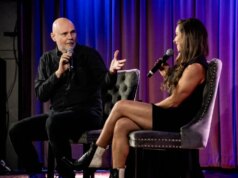
With the Tribeca premiere intending — and the Aug. 28 release date for the “Good Grief” album freshly announced — Bareilles and director Josh Alexander sat down with Variety to discuss their extraordinary cinematic collaboration. No one will be mistaking it for a typical example of the modern, record-label-commissioned “making of” album documentary. That’s due to Bareilles’ fearless dedication to the subject matter but also to the hiring of Alexander, whose previous films as a documentary director, writer and/or producer (the Al Sharpton doc “Loudmouth,” “Prescription Thugs,” the segregation-themed “Southern Rites”) have had nothing to do with chronicling the entertainment world. Fortunately, these Hudson Valley neighbors and their spouses renewed an old friendship just as Bareilles was about to go into Dreamland, a church-turned-studio in the upstate New York area, with an intimate group of musician friends and realized that the week of sessions they’d booked could result in some kind of movie and well as music kismet.
Before we get into the emotional content of the film, it’s worth noting that there aren’t a lot of films that really document what it’s like to make an album on this granular a level. Are there films you would cite as models for this, or did you feel like you were getting into unusual territory?
Josh Alexander: I think it was super unusual territory. However, I would have to call out ancestor films like “The Last Waltz,” (D.A. Pennebaker’s) “Original Cast Album: Company,” “Amazing Grace” and “Don’t Look Back.” I’d seen this approach to shooting touring, and obviously “The Last Waltz,” with Scorsese’s brilliance in capturing that entire last concert from the band’s experience with each other on stage. So I knew that was the terrain I wanted to traverse. But a lot of the time in what’s done with recording sessions, it’s being shot by labels as BTS or promotional material that gets used later on in the marketing of an album, or what they’re not doing is actually recording sound in a live way, so it ends up feeling like a music video. The hope was to try to capture this in a true direct-cinema way.
Sara Bareilles: Also, the grief is so tenderizing and so raw. The material did not want a dog-and-pony show. And you’ve known me a long time — I am a ham. I love to be watched. I love to be on camera. I love to make people laugh. And there was just a mechanism for that that was not activated in this. No one was performing for the camera. We were really trying to, like a divining rod, get to the heart of what is emerging here that is muse and music and spirit and source. I mean, Dreamland is literally a cathedral. There was something very sacred that felt like it was unearthing as we were in the recording process. It was amazing to have cameras present and not feel their presence.
Alexander: The key was making sure that we could really let an audience experience it as if they were there. So, not relying on finished tracks, and not relying on what was coming through the ProTools session after these recordings. We recorded 19 tracks of continuous audio every day the entire time we were there. Everywhere was mic-ed so an audience could actually really have the lived experience. And I think that’s one of the reasons why the camera starts to disappear, because you really are capturing what’s happening as opposed to putting something on it afterwards. And I must say our cinematographer, Jenna Rosher, is one of the great vérité cinematographers. She did “Jesus Camp” back in the day, and she did the Billie Eilish doc for R.J. Cutler. I’ve always wanted to work with her, and it turned out she was a Sara fan and pulled out of a job in Asia to come and do this. Sara can attest she has the wonderful quality of knowing both when her presence should be felt and when to disappear, which is an incredible gift in a cinematographer.
One thing, too, that Sara and I talked about early on was having the crew and the musicians eat lunch together every day. We didn’t want there to be a separation between a film crew and the musicians. We were all there participating in the same experience, making the thing. That made it feel like summer camp for everyone. You arrive and this extraordinary set of things happens: You fall in love, you have your first kiss, you learn how to canoe, and then at the end, you’re all standing outside of the bus weeping. That felt true for the crew, too. After these long, long takes, which are sort of abnormal for the way that docs are getting made these days, we would find ourselves off in a corner weeping, talking about our own grief and the losses in our own life. So everyone was really going through the same journey the entire week, which is pretty unique.
Sara, when we talked last year about your role with the Andrea Gibson documentary, “Come See Me in the Good Light” (which she executive-produced and co-wrote and sang an original song for), you mentioned that the grief themes of that film really tied in with the ideas in the album you had just finished. And I remember thinking at the time that I was excited to hear this album about how you dealt with grief — but that maybe when it came time to sort of pitch the album to people, you probably wouldn’t focus on that angle so much, for fear of scaring people off. But clearly, after seeing the documentary, you don’t have any fear of letting people know what this music is about. Was there any coming to terms at all, even in just commissioning this film, with letting people in to your feelings on that level?
Bareilles: Yeah, there is some inevitability about the sharing of the heart of what has been going on that feels like it’s just baked into the DNA of the music. I wouldn’t know how to present this any other way. I don’t think it would work. And the grief was such a radical teacher about my life. I feel like I’ve been through another sort of before-and-after experience. And yes, losing my friend Gavin was a major catalyst in that, but it’s a little bit of a domino effect of this last chunk of time of my life — of just mental health and multiple friends dying, and the fertility odyssey, and the grief of the country. I think I’m not alone in how disregulated and destabilized people feel in general. I wouldn’t know how to dress it up any other way. It just feels like this is what it wants to be.
There is a part of me that feels some modicum of anxiety around being at the precipice of sharing all of this for the first time. The first images will come out, the film will come out, the music is going to start trickling out. I’m remembering talking to my dear friend Renée Elise Goldsberry when she was about to release her documentary at Tribeca two years ago, and she had a full-on panic attack before it came out, where she was like, “What the fuck did I do? What was I thinking?,” about how exposing the experience would feel. But it’s just what’s true. And I’m just choosing at this moment to believe that there is medicine in that. It’s happening on purpose, and I think it’s good for the world to see people in truth, even if it’s kind of an ugly, hard truth. But the truth is, I just think we need more of the truth in the world. More truth, please.
Alexander: I felt this very clearly that week we were shooting the film, and my crew felt it: The film and the music are kind of a permission structure for people to grieve. And I think everyone is just hungry for permission, because there’s so much shame. So part of what you see when there’s permission granted to grieve is that it happens, and then on the other side of it is joy. That’s why the week was filled with tears, but also such laughter. Also, part of what is so important around grief is not only letting it out, but that it’s witnessed. There’s something very important in that one’s own grief is witnessed by others, and the film is also allowing for that. I mean, we see the result of cultures around the world, and in this culture, when grief is not worked through. We see the violence that can be done to self and others. So, I think the permission the film gives and this music gives to feel things that a lot of us feel ashamed of is really quite special.
Sara Bareilles in ‘Sara Bareilles: Good Grief’
Courtesy 42West
It’s not just one type of grief, as Sara just said. There is the aspect of the film dealing with IVF. I’ve heard women tell their stories about IVF, but more often it is if they got the resolution they wanted, and then they can talk about the misses and how tough a journey it was to get there. You less often hear women talking about “I went through this and it didn’t work, and I’m having a hard time with that,” where everything has not resolved. And the film brings this up very early on. The expected structure might have been to ease in with stuff focusing on the recording sessions, and then get into the heavy stuff in the second half. But, Sara, you’re having that IVF discussion with Butterfly Boucher in the first 10 minutes, which throws us right into everything emotional.
Bareilles: First scene of the movie (almost). I mean, that is exactly what happened in real time. I saw them (Boucher) and they’re dear, dear friends, and so, you dive into the deep end with your people, immediately. God, we were crying within five minutes of talking to each other. It was just my favorite.
Alexander: How we approached the film in the edit was, we were really brutal about honoring chronology. This was a do-no-harm film in every way, shape, and form, from the edit to the sound mix to the coloring. How do you just allow the witnessing to happen without putting too much on it? Because you can very quickly start to sink it if you’re not careful. It becomes forced and inauthentic. And so everything that happened in the film happened exactly as it happened chronologically, except for two moments in the film that break time — when we go back to meet Chad (Bareilles’ late friend), and then at the end of the movie, when you kind of see the whole week. Other than that, it’s chronological. So it was really about distilling, as opposed to moving things into different places.
Bareilles: And one thing I’ll say about the IVF of it all is that I have had that same experience of wishing I heard more people kind of reporting from the messy middle of this journey, which I am very much in and on as we speak. I completely understand that people are ready to talk about how painful the experience of trying is when they are holding their healthy baby in their arms. I have been on this journey now for a few years, and I have really struggled with whether or not I should be more public about what feels so private about this very personal endeavor. And just the timeline of how things have worked out feels like it’s solving the question of should I or shouldn’t I be talking about this more? This is just where it lands, and I am still in the messy middle, and I don’t have a baby, and whether or not I like it, I am probably some days gonna feel like talking about it, and other days be like, “Can we fast-forward?” It’s a tricky, tricky alchemy.
At one point in the film, some of the recording sessons have already transpired, and then Emily King shows up as kind of a latecomer, and people are catching her up. Solomon Dorsey is describing the material that’s been worked on, and then he wonders aloud whether every song so far has had to do with death in some way. And then there is some laughter over the fact that, yes, it’s either been about death or lack of life, referring to the song about IVF not woring. Now, it doesn’t seem like every song on the album ended up being about those things. We see you doing “Hands Off My Body,” which is a more political-leaning song that fans have heard before. But generally speaking, did this seem like a concept album to you that was being captured?
Bareilles: I really think when we landed on the title of “Good Grief,” it felt like grief is the through line. It is grief of body, grief of spirit, grief of country, grief of loss of life. But good grief —that grief is not the enemy, and feelings are not the enemy. That’s an Andrea Gibson quote. But something you find going into these dark corners is that death is very alive. And we are a culture that is terrified of dying. And so, yeah, I think this album conceptually is kind of trying to dive straight in to that idea of loss — and all of the bounty that it holds within it. Losing what we love is not just one thing. It is magnificent and awesome and terrifying and everything in-between.
Director Josh Alexander is seen leaving the Philadelphia screening of “Loudmouth” during The 31st Philadelphia Film Festival on October 29, 2022.
GC Images
The album has a definite release date, while when the film will come out beyond the festival circuit is still up in the air. But if all things were equal, do you have any thoughts about whether it might be a better experience for people to see the film first and then hear the album, or do you hope they hear the album first and then the film kind of expand the album?
Bareilles: That’s a good question. I don’t know. Do you have a sense about that, Josh?
Alexander: I think it’s both, to be honest. I can imagine people coming to the album through the film. I can imagine people coming to the film from the album. And they’re very different. You know, Sara continued to work on this album the whole year while I was busy working and finishing the film. So I think people will really be able to appreciate how the film captures a particular moment in time and in the process in a very unique way, but then the album is a whole other different thing. They’re really kind of in conversation, and that conversation can start on either side.
Bareilles: I think there will be people that watch the film and then listen to the album and will like, “I wish you would’ve just released the album that I heard in the film.” And they’re gonna be like, they wish it was a pencils-down kind of thing; they’re gonna want something that feels maybe more organic than the album might feel as a complete thought. My hope is that people can, like Josh said, experience it as a snapshot.
This was a very atypical experience for me in terms of recording. We were recording this record for a full year — not every day, of course, but I’ve never spent that much time. So the trick with that is that you get a little bit of space and perspective, and then you start second-guessing your earlier opinions. And there are songs on the record that don’t exist in the film. So I think that’s a perfect way to say it, Josh, is that these are pieces that are in conversation. For anyone who is interested in the origin story, the film is the birthplace of so much of what comes after, which will be stage shows and everything that comes from it. For people who love the genesis of a project, it’s really getting an incredible, intimate look into how something begins… the spark.
Alexander: Yeah, I think about, Sara, the last day, when you played “Forever” for the band for the first time. I just feel so lucky that that was filmed. It’ll never be like that again, like it is in the film, and seeing the genesis of a lot of these songs in that moment when they were created is really special.
As it happens, most fans will be hearing the album first, given that it’s coming out in a little under three months, with a tour of Sara’s to follow. Do you have a projection for when they might be able to see the film?
Alexander: The big premiere is at Tribeca. We are starting to have conversations with distributors and buyers now. We’re the centerpiece film at DC Docs the following weekend, and a bunch of other film festivals are falling into place. The hope is that it’s out there in a really beautiful and big way, both for people to have the experience together seeing it in theaters, and also available more widely after that.
Diterbitkan : 2026-06-04 20:03:00
sumber : variety.com