
4 Years Later, DC Secretly Revives Leslie Grace And Brendan Fraser’s Canceled Batgirl Film
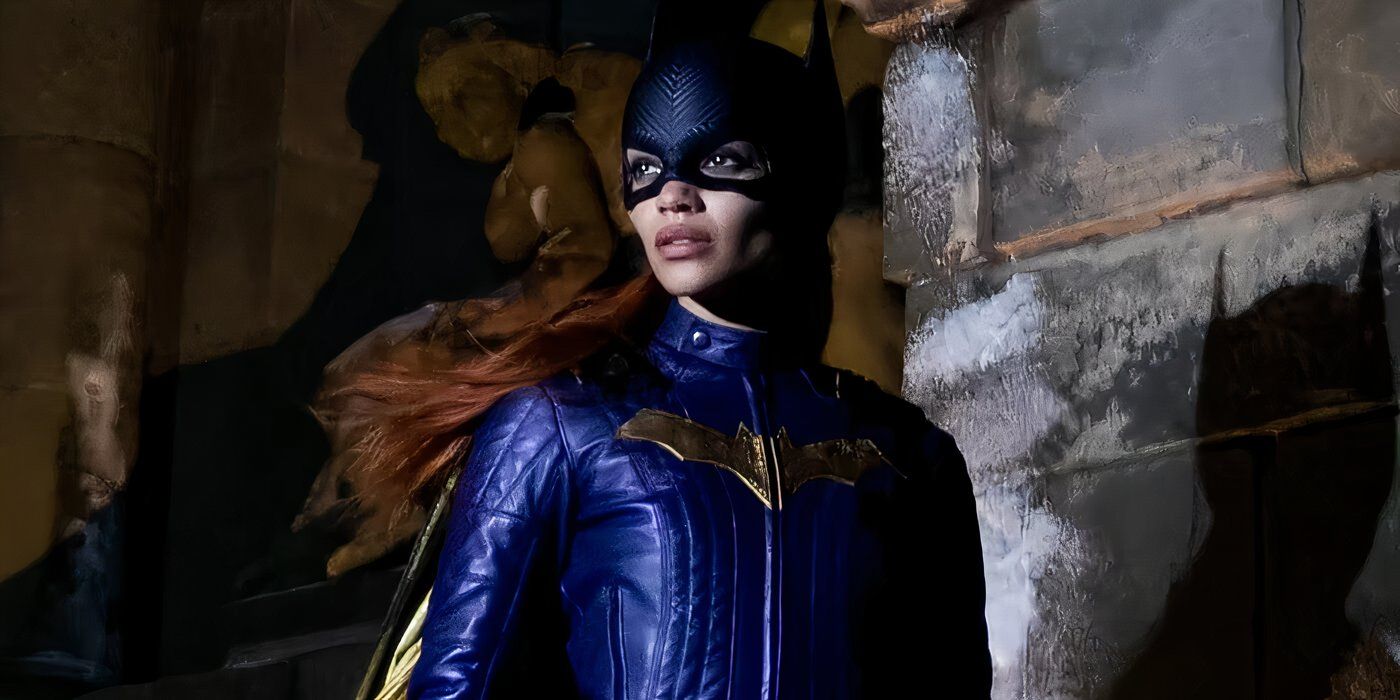
Warning! This post contains SPOILERS for LEGO Batman: Legacy of the Dark Knight Warner Bros.’ Batgirl movie remains one of the most infamous movie cancellations in modern movie history. After filming had wrapped and post-production was nearly finished, the studio chose to shelve the entire project as a tax write-off rather than releasing the DC film starring Leslie Grace as Batgirl, Brendan Fraser, and Michael Keaton as Batman. However, the movie was recently revived with a perfect (if not unexpected) tribute. There were other movies shelved by Warner Bros., like Coyote vs. ACME, which was ultimately sold and will finally see the light of day later this year. However, Batgirl will more than likely remain unseen, especially with the full DC Universe reboot that occurred in the interim. Even so, fans have continued to wonder what might have been thanks to various set photos, concept art, and behind-the-scenes details.
This brings us to four years later, where the newly released LEGO Batman: Legacy of the Dark Knight game is packed with amazing tributes and references to Batman’s entire cinematic, television, comic book, and gaming history. Remarkably, one of its coolest nods looks to be a very big homage to the Batgirl movie audiences never got to see.
DC’s Batgirl Movie May Be Dead, But LEGO Batman Revives The Movie In The Best Way
In the first level where Barbara Gordon’s Batgirl becomes playable in LEGO Batman: Legacy of the Dark Knight, her first major mission sees Gordon suiting up after Firefly attacks a Gotham Halloween party, forcing the young hero to make her debut under pressure and joining Batman to take the flying pyromaniac down. As such, it’s a scenario that should absolutely sound familiar to those who followed Batgirl’s cancellation and the ongoing controversy. According to plot details that emerged following Batgirl’s cancellation, Brendan Fraser’s Firefly was also meant to attack a Halloween party hosted by Michael Keaton’s Bruce Wayne. That sequence would have served as a major early vigilante debut for Leslie Grace’s Barbara Gordon as Batgirl for the very first time.
The similarities are simply too specific to ignore in Legacy of the Dark Knight, with the mission itself feeling like a deliberate nod to the unreleased DC film. Likewise, Batgirl’s Burnside costume is unlocked not long after this first Barbara Gordon mission, one of her most recognizable looks in the modern era which also served as the primary inspiration for the costume worn by Leslie Grace during Batgirl’s production, making the tribute that much stronger. All things considered, the first Batgirl mission in LEGO Batman: Legacy of the Dark Knight may be the closest fans ever get to experiencing even a glimpse of the abandoned DC film.
Legacy of the Dark Knight Is Truly One Of The Greatest LEGO Games Ever
What’s especially impressive is that this wonderful Batgirl tribute is just one small part of what makes LEGO Batman: Legacy of the Dark Knight so dang special as a definitive Batman game.
The game truly does live up to its name, fully embracing Batman’s entire history and nearly every era imaginable across mediums: Burton, Nolan, Reeves, the DCEU, classic television, comics, animation, and even canceled projects like Batgirl are all represented in some shape or form. Likewise, the gameplay is a tribute in and of itself, borrowing heavily from the open world traversal, combat, and detective mechanics from Rocksteady’s beloved Arkham trilogy.
From the Caped Crusader to The Batman · Eight Questions
How Well Do You Know Batman?
“I’m Batman.”
Bob & BillDetective Comics #27, 1939
The Camp EraAdam West, 1966
Burton & SchumacherKeaton to Clooney, 1989–97
The Dark KnightBale & Ledger, 2005–12
The BatmanPattinson & Reeves, 2022–
LIGHT THE BAT-SIGNAL →
01
Batman debuted in Detective Comics #27 in May 1939. Cartoonist Bob Kane received sole credit for creating the character for the next 76 years — on every comic, every TV series, every film — despite being only half of the real partnership. His uncredited collaborator wrote much of the original story, designed the cowl and cape, invented the name “Bruce Wayne,” named Gotham City, and helped create the Joker, the Penguin, the Riddler and Catwoman. DC finally added his name to all Batman credits in 2015. Who?
AJerry Robinson
BBill Finger
CJoe Shuster
DOtto Binder
✓ Correct! Bill Finger (1914–1974). Kane’s original 1939 pitch was a Superman-style figure in a red leotard with a domino mask and bat-wings; Finger talked him into the cowl, scalloped cape, gauntlets and grey-and-black colour scheme that have defined the character ever since. Finger also wrote Detective Comics #27 itself, named Bruce Wayne (after Robert the Bruce and Anthony Wayne), created Gotham as a stand-in for New York, and co-created most of the rogues’ gallery — while signing a 1939 contract that gave Kane exclusive byline credit. Kane received millions in royalties; Finger died poor and uncredited. After a 2014 documentary and a 2015 family campaign, Warner Bros. and DC added “Batman created by Bob Kane with Bill Finger” to every credit starting with Gotham (Fox), Batman v Superman (2016) and forward.
✗ Wrong. The answer is Bill Finger. Jerry Robinson (option A) really did co-create the Joker and Robin alongside Finger and Kane — he was the third member of the early studio — but the cowl, cape, “Bruce Wayne,” Gotham City and the actual script of Detective Comics #27 were Finger’s. Joe Shuster co-created Superman, not Batman. Otto Binder created Supergirl and Mary Marvel. Finger signed away his byline in 1939 and didn’t receive on-screen credit until 2015.
NEXT →
02
Batman: The Movie — released in July 1966 between the first and second seasons of the ABC TV series, featuring the “Holy Whatever, Batman!” tone, the four super-villain team-up (Joker, Penguin, Riddler, Catwoman), the shark-repellent Bat-spray, and the Batmobile/Batboat/Batcopter — is generally considered the first theatrical Batman feature film. Two earlier 1940s movie serials don’t qualify as standalone features. Which actor played Batman in this first theatrical feature?
AAdam West
BLewis Wilson
CRobert Lowery
DMichael Keaton
✓ Correct! Adam West (1928–2017), with Burt Ward as Robin and Cesar Romero as the Joker. West played the role across 120 ABC episodes (1966–1968) and the 1966 theatrical feature, hammed up the camp tone to perfection, and then spent decades typecast before reclaiming the role in animated form (Batman: Return of the Caped Crusaders, 2016) and as Mayor West on Family Guy. The two traps are real: Lewis Wilson played Batman in Columbia’s 15-chapter 1943 serial Batman, and Robert Lowery played him in the 1949 sequel serial Batman and Robin — but those were Saturday-morning chapter plays, not standalone theatrical features. Michael Keaton’s Batman doesn’t arrive until Tim Burton’s 1989 film.
✗ Wrong. The answer is Adam West. The trap is real but technical: Lewis Wilson (1943) and Robert Lowery (1949) both played Batman in Columbia movie serials, but those were 15-chapter Saturday-morning serials, not theatrical features. Adam West’s 1966 Batman: The Movie — with the four-villain team-up and the shark-repellent Bat-spray — is the first standalone Batman feature film. Michael Keaton doesn’t arrive until 1989.
NEXT →
03
Batman: The Animated Series (Fox Kids, 1992–1995) — the Bruce Timm/Eric Radomski production with the deco-noir “Dark Deco” backgrounds painted on black paper — is consistently ranked by fans and creators as the definitive screen Batman. Its central performance is so iconic that the actor reprised it across 30 years, every DC Animated Universe series, and a dozen Arkham-series video games. He died on November 10, 2022, and DC essentially treated his passing as the death of Batman’s voice. Name him.
ATim Daly
BKevin Conroy
CMark Hamill
DWill Friedle
✓ Correct! Kevin Conroy (1955–2022). Conroy’s key innovation, on his first audition for BTAS in 1991, was to give Bruce Wayne and Batman two distinct voices — Bruce as the lighter, charming playboy and Batman as the deeper, harder-edged growl — a take that became the industry default and was openly copied by Christian Bale, Ben Affleck and Robert Pattinson on screen. He played the role for 31 years, across BTAS, Superman: TAS, Justice League, Justice League Unlimited, Batman Beyond (as the elderly Bruce), and every Rocksteady Arkham game. The trap is genuine: Mark Hamill voiced the Joker opposite Conroy on BTAS and is just as legendary in that role. Tim Daly voiced Superman; Will Friedle voiced Terry McGinnis in Batman Beyond. Conroy died in November 2022 at 66.
✗ Wrong. The answer is Kevin Conroy. Mark Hamill (option C) is the giant trap — he voiced the Joker opposite Conroy on BTAS for 30 years and is widely considered the definitive screen Joker — but Batman was Conroy. Tim Daly voiced Superman in the DCAU; Will Friedle voiced Terry McGinnis in Batman Beyond, with Conroy still playing the elderly Bruce. Conroy died November 10, 2022.
NEXT →
04
Jack Nicholson’s Joker in Tim Burton’s Batman (1989) earned him an estimated $60–$90 million from a film for which his actual on-screen salary was a fairly modest $6 million — making it, dollar-for-dollar, one of the most famously lucrative single roles in Hollywood history. He achieved this by negotiating an unusual deal structure that other actors immediately tried (and largely failed) to copy. What was it?
AA flat $50 million bonus on opening weekend success
BA no-cut equity stake in Warner Bros. itself
CA percentage of box-office gross AND merchandise royalties
DA fixed-rate-per-ticket micro-royalty on every theatrical screening
✓ Correct! Nicholson took a $6 million base, a piece of the box-office gross (so-called “first-dollar gross” rather than net profits, which Hollywood accounting has a habit of vapourising) AND a percentage of Batman merchandising — the toys, posters, t-shirts, lunch boxes, video games and ride tickets. Batman (1989) grossed $411 million theatrically and unleashed the largest superhero merchandising wave in history, and Nicholson’s royalties on it have reportedly continued accruing for decades. His agent Sue Mengers, and his attorney’s “back-end participation” structure, became the gold standard talent-deal template that A-listers like Tom Cruise and Robert Downey Jr. would later use. Nicholson also negotiated top billing over Michael Keaton (despite Batman being the title character) and limited shoot days. It’s the most-copied bad-guy deal in Hollywood.
✗ Wrong. The answer is C — a percentage of box-office gross plus merchandising royalties. The $6 million base salary was relatively modest by 1989 star standards; the magic was the back-end participation in both ticket sales and the unprecedented Batman toy/poster/lunchbox merchandise wave, which has reportedly continued paying out for decades. Tom Cruise and RDJ later borrowed the same gross-points-plus-merch template. There was no $50M opening-weekend trigger, no equity stake in Warners, and no per-screening micro-royalty.
NEXT →
05
After Ben Affleck stepped down from his planned solo Batman film, Warner Bros. handed the project to a new director who reconceived it as a noir-detective serial-killer story modelled on Se7en and Zodiac, runs 2h 56min, casts Robert Pattinson as a brooding second-year Bruce Wayne, and gives Paul Dano’s Riddler a Zodiac-style cipher gimmick. The Batman (2022) grossed $772 million worldwide. Who directed it?
AZack Snyder
BChristopher Nolan
CTim Burton
DMatt Reeves
✓ Correct! Matt Reeves — the Cloverfield (2008), Let Me In (2010), and Dawn of the Planet of the Apes (2014) / War for the Planet of the Apes (2017) director. Reeves co-wrote The Batman with Peter Craig, leaned hard into a Fincher-noir detective tone (the Riddler is essentially Zodiac), and got Pattinson, Zoë Kravitz (Catwoman), Colin Farrell (an unrecognisable Penguin), Paul Dano (Riddler) and Jeffrey Wright (Gordon). The film established its own continuity separate from the DCEU/James Gunn DCU. The Penguin (HBO/Max, 2024) followed as a Reeves-produced spin-off, and The Batman: Part II is currently scheduled for 2026.
✗ Wrong. The answer is Matt Reeves — the Cloverfield, Let Me In and Planet of the Apes-reboot director. Nolan made the Dark Knight trilogy (2005–2012); Snyder made Batman v Superman (2016) and Justice League (2017/2021) with Affleck’s Batman; Burton made the 1989/1992 Keaton films. The Batman (2022) is Reeves’s, in its own continuity, with The Penguin (2024) as the spin-off and Part II in 2026.
NEXT →
06
Joel Schumacher’s Batman & Robin (1997) — with Bat-nipples on the suit, Arnold Schwarzenegger’s Mr. Freeze spitting ice puns (“Let’s kick some ice!”), Uma Thurman’s Poison Ivy, Alicia Silverstone’s Batgirl, and an estimated $238 million box-office failure on a $125 million budget — is widely regarded as one of the worst superhero films ever made. It killed the live-action Batman franchise for eight years until Batman Begins (2005). Who played Batman in it?
AGeorge Clooney
BVal Kilmer
CMichael Keaton
DChristian Bale
✓ Correct! George Clooney — in his only outing as Bruce Wayne, between his ER fame and Out of Sight. Clooney has publicly apologised for the film for nearly thirty years; he told Entertainment Weekly he “destroyed the franchise” and routinely thanks fans for their hostility. The trap is Val Kilmer, who played Batman in the previous Schumacher film, Batman Forever (1995) — he was originally signed for two but exited due to scheduling and reported disputes with Schumacher. Keaton played Batman in Burton’s 1989 and 1992 films (and returned in The Flash, 2023). Bale arrived eight years later in Nolan’s Batman Begins (2005). The Bat-nipples were Schumacher’s, the ice puns Schwarzenegger’s, the apology Clooney’s.
✗ Wrong. The answer is George Clooney. Val Kilmer (option B) was Batman in the previous Schumacher film, Batman Forever (1995) — he then exited and Clooney took over for Batman & Robin. Keaton was Batman in Burton’s 1989/1992 films (and returned in The Flash, 2023). Bale arrived in Nolan’s Batman Begins (2005), eight years after Batman & Robin killed the franchise.
NEXT →
07
Cesar Romero’s Joker on the 1966–1968 ABC Batman series — white grease-paint, green wig, red lipstick, manic giggle — remains one of the most-cited comedic TV villains in American history. Romero, a leading-man matinée idol since the 1930s, agreed to the role on one condition: he refused to do a specific thing for the makeup. You can still see what he refused if you look closely. What did Romero refuse?
ATo wear the green wig (he wanted his own hair dyed)
BTo speak in a falsetto voice
CTo shave his moustache
DTo wear purple gloves
✓ Correct! Romero refused to shave his trademark moustache — reportedly a vanity rule he’d had since the 1930s — so the makeup department simply caked white grease-paint over it. If you watch the 1966 episodes or Batman: The Movie (1966) on Blu-ray, you can clearly see the moustache bristles poking through the white paint above his lip. It’s one of TV’s most-cited “visible-prosthetic” quirks — later parodied by Burt Ward and explicitly nodded to in the 2016 animated Batman: Return of the Caped Crusaders (Romero was already dead, having passed in 1994, but the animation reproduces the moustache underneath the makeup). Romero played the role for all three TV seasons and the 1966 feature.
✗ Wrong. The answer is shaving his moustache. Romero had had his trademark Latin-lover moustache since the 1930s, refused to lose it for any role, and the makeup department simply painted white grease-paint over it — if you look closely on Blu-ray you can see the bristles poking through under his lip. The wig, the high-pitched giggle and the purple gloves were all things he gladly did.
NEXT →
08
Todd Phillips’s Joker (2019) — the standalone, R-rated, $1.07-billion-grossing Joaquin Phoenix vehicle that exists outside any DC continuity — was nominated for 11 Academy Awards, the most of any comic-book-derived film at the time. It won Best Actor for Phoenix. It also won exactly one other Oscar that night. Which?
ABest Director (Todd Phillips)
BBest Original Score (Hildur Guðnadóttir)
CBest Adapted Screenplay (Phillips & Silver)
DBest Picture
✓ Correct! Best Original Score, Hildur Guðnadóttir — the Icelandic cellist and composer who, in the same awards cycle, won the Emmy and Grammy for Chernobyl (HBO, 2019). Joker’s score (anchored by the haunting cello motif during Arthur Fleck’s bathroom dance) was her breakthrough; she became the first solo woman to win Best Original Score since Marilyn Bergman in 1984 (and the fourth ever). Phillips lost Best Director to Bong Joon-ho for Parasite, which also won Best Picture, beating Joker’s nomination. The film’s screenplay nomination was Adapted (because it’s based on existing DC IP), not Original — option C names the right category but it lost to Jojo Rabbit.
✗ Wrong. The answer is Best Original Score — Hildur Guðnadóttir (also the Chernobyl composer that year). She became the fourth solo woman ever to win the category. Phillips lost Best Director to Bong Joon-ho (Parasite); Best Picture also went to Parasite; the screenplay nomination was Adapted (not Original) and lost to Jojo Rabbit. Phoenix’s Best Actor + Guðnadóttir’s Best Original Score are Joker’s two 2020 Oscar wins.
REVEAL MY RATING →
The Bat-Signal Has Faded · Final Scorecard
Your Gotham Standing
/ 8
World’s Greatest Detective — or a Gotham red herring?
ROUND TWO
Four years after Warner Bros. pulled the plug, it’s pretty cool to see that LEGO Batman: Legacy of the Dark Knight’s developers found a very organic means of keeping the memory of the canceled Batgirl movie alive.
Systems
Released
May 22, 2026
Developer(s)
TT Games
Publisher(s)
Warner Bros. Interactive
PC Release Date
May 22, 2026
Xbox Series X|S Release Date
May 22, 2026
PS5 Release Date
May 22, 2026
Diterbitkan : 2026-06-04 03:48:00
sumber : screenrant.com