
Ranking the greatest NFL coaches of all time: Bill Belichick, Vince Lombardi battle for No. 1 spot
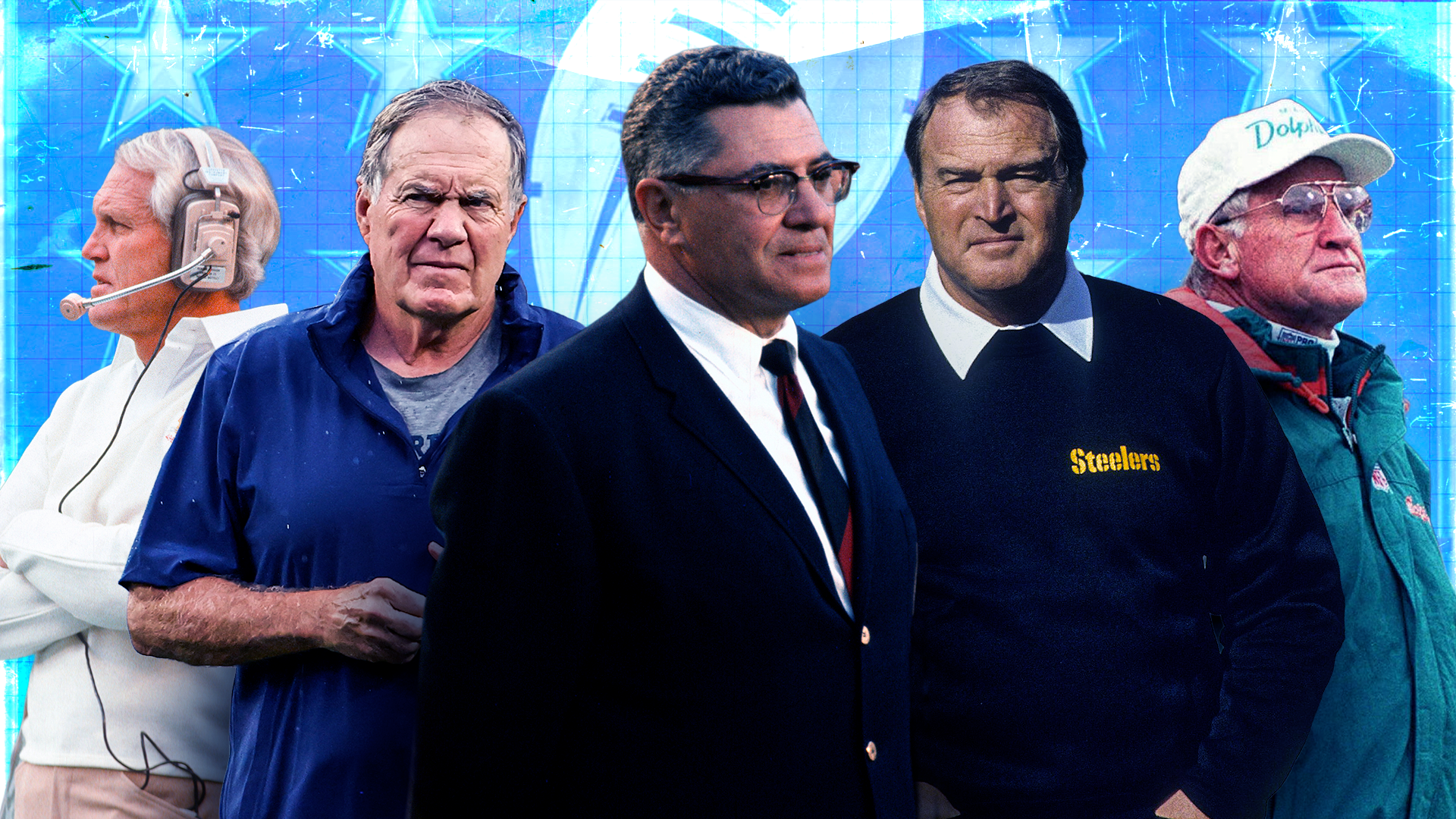
Throughout the NFL’s 107-year history, iconic coaches have graced the gridiron, leaving a lasting imprint on what has become America’s most popular sport. The NFL has had many notable coaches over the years, but some have left an impact that continues to resonate in 2026 and beyond. With that in mind, we found a way to determine the 20 greatest coaches in NFL history. In order to find the answer, six CBS Sports NFL reporters voted to create a cumulative list of the greatest coaches of all time. While some opinions differed, the final result was a comprehensive and interesting account of coaches who made significant impacts on the game during their time on the sidelines. The list comprises coaches from every era and every decade, from the league’s inaugural season through the 2025 season. The list includes many of the usual suspects, but it also has a few surprises, specifically the inclusion of two coaches who have yet to earn a spot in the Pro Football Hall of Fame. 20. Tony Dungy Dungy was a trailblazer in more ways than one.
Getty Images
A little-known fact about Tony Dungy, he led the Steelers in interceptions during Pittsburgh’s 1978 championship season. After a short NFL playing career, Dungy rejoined the Steelers as a coach and was tabbed as Chuck Noll’s defensive coordinator before the 1984 season. That year, Pittsburgh shocked the Denver Broncos in the playoffs and advanced to the AFC title game for the final time during Noll’s Hall of Fame career.
Dungy later spent time on Marty Schottenheimer’s staff in Kansas City, where he also worked alongside future Hall of Fame coach Bill Cowher. He then spent four years as Dennis Green’s defensive coordinator in Minnesota before receiving his first head-coaching opportunity with Tampa Bay. In Tampa, Dungy quickly turned around a franchise that had endured 13 consecutive losing seasons. During his second season, Dungy led the Buccaneers to their second playoff win in franchise history and first since 1979. Two years later, in the NFC Championship Game, the Buccaneers held a 6-5 lead late before the Rams escaped with a five-point win. Dungy was fired, however, following two seasons that ended in quick playoff exits. He was quickly hired by the Colts, where he was tasked with helping Indianapolis get past its own playoff shortcomings. The Colts continued to come up short in the playoffs from 2002-05 (with the Patriots defeating them twice), but they finally broke through in 2006, defeating the Patriots in a thrilling AFC title game before beating the Bears in Super Bowl XLI.
Dungy is synonymous with the Tampa 2 defense, which helped the Buccaneers win a Super Bowl a year following Dungy’s departure. Dungy is also known for his soft-spoken demeanor, which is uncommon among NFL coaches. Despite his unwillingness to yell, Dungy still got his message across to his players, who carried him off the field after he became the first Black head coach to win the Super Bowl. 19. Bud Grant Grant led the Vikings to four Super Bowls over an eight-year span.
Getty Images
An accomplished athlete, Grant played in both the NFL and the NBA and won a title with the Lakers in 1950. After a short stint with the Eagles, Grant left over salary dissatisfaction and signed with the CFL’s Winnipeg Blue Bombers. Grant is believed to be the first professional athlete to play out his contract before joining a new team that offered him more money. He led his respective conference in receptions and receiving yards multiple times and holds the professional football record with five interceptions in a playoff game. At age 29, Grant became the youngest coach in CFL history when he took over the Blue Bombers. In 10 seasons, he led Winnipeg to the Grey Cup six times, winning the championship in 1958, 1959, 1961 and 1962. Grant was initially approached about coaching the Vikings in 1961, but he didn’t accept the job until 1967.
In 1969, Grant led the Vikings to their first NFL title. In Super Bowl IV, however, Minnesota lost to the Chiefs, which was the final game between the AFL and the NFL. The Vikings went back to the Super Bowl three times between 1973-76, but they lost each game by a combined score of 72-27. Fran Tarkenton, the Vikings’ Hall of Fame quarterback, attributes the Vikings’ Super Bowl struggles to the team not practicing during the first week between the NFC title game and the Super Bowl. While his team’s Super Bowl preparation was suspect, Grant helped create a massive home-field advantage for the Vikings (who at the time did not play their home games in a dome) by practicing outdoors in winter to acclimate to the cold. The Vikings did, however, suffer a gut-wrenching loss at home in the 1975 playoffs after falling victim to Roger Staubach’s Hail Mary pass to Drew Pearson. During his 28-year coaching career, Grant won a whopping 260 regular-season games and 26 playoff games. He is the first coach to lead one team to four Super Bowls.
18. Weeb Ewbank Ewbank (pictured with Joe Namth) won two of the most iconic games in pro football history.
Getty Images
Ewbank is synonymous with two of the most important games in the NFL’s first 50 seasons. He was the winning coach in the Colts’ 23-17 victory over the Giants in the 1958 Championship Game, still regarded as the greatest football game ever played. The game, which was the first in NFL history to be decided in overtime, is credited with helping pro football eventually surpass baseball as America’s main pastime. In 1959, Ewbank led the Colts to a successful defense of their title. Ewbank presided over an offense that featured several Hall of Famers, including quarterback Johnny Unitas (who is considered the best quarterback of the NFL’s first half-century), wideout Raymond Berry and running back Lenny Moore.
The Colts eventually fired Ewbank following three non-playoff seasons. He quickly resurfaced with the Jets, an AFL team that had yet to have a winning season. The Jets continued to struggle until 1967, when Joe Namath (who chose to play in the AFL over the NFL after being drafted by both leagues in 1965) became the first quarterback in either league to throw for over 4,000 yards in a season. In 1968, the Jets surprised just about everyone when they dethroned the defending AFL champion Raiders for the right to play the NFL champion Colts — Ewbank’s former team — in Super Bowl III. An 18.5-point underdog, the Jets recorded a shocking, 16-7 win on the strength of five forced turnovers, a bruising running game and the stellar play of Namath, who was named the game’s MVP. Ewbank remains the Jets’ all-time leader with 71 wins. 17. Hank Stram Stram’s Chiefs won the final game before the AFL-NFL merger
Getty Images
A true showman, Stram was the first football coach to wear a microphone, which led to his iconic soundbites during the Chiefs’ victory over the Vikings in Super Bowl IV, the final game played before the AFL-NFL merger.
Kansas City’s win marked the second consecutive Super Bowl victory by an AFL team. A big underdog, the Chiefs dominated the NFL champion Vikings, 23-7. The game showcased several of Stram’s innovations, including his moving pocket and triple-stacked defense. The Chiefs’ first coach, Stram, led Kansas City to its first championship in 1962, its third year of existence. The Chiefs won a second AFL title in 1966 and earned the right to face Vince Lombardi’s Packers in the first Super Bowl. The Chiefs were in the game until an early-second-half interception opened the floodgates, and the Packers eventually cruised to a 35-10 win. Stram enjoyed a prolific partnership with quarterback Len Dawson, who led the AFL in touchdown passes four times and in completion percentage seven times over an eight-year span. Stram also presided over a defense that featured six future Hall of Famers.
Kansas City’s run essentially came to an end on Christmas Day, 1971, when Stram’s squad fell to the Dolphins in the longest game in NFL history. The Chiefs missed the playoffs the following two seasons, and Stram ended his coaching career with a forgettable two-year stint with the Saints. 16. Mike Shanahan Shanahan helped Elway retire as a two-time Super Bowl champion.
Getty Images
Shanahan isn’t currently in the Hall of Fame, although his career is certainly worthy of enshrinement. From 1994-98, Shanahan won three Super Bowls, including one as the 49ers’ offensive coordinator and two more as Broncos coach. Under Shanahan’s tutelage, Steve Young had one of the best seasons in NFL history, including winning league and Super Bowl MVP honors and throwing the most touchdown passes (6) in Super Bowl history.
In Denver, Shanahan helped John Elway cap off his career with back-to-back Super Bowl titles. Shanahan helped surround Elway with a talented supporting cast that included Terrell Davis, a former sixth-round pick who won league and Super Bowl MVP honors while playing in Shanahan’s offense. Davis was the first of several running backs that flourished in Shanahan’s zone blocking scheme. In 1997, Shanahan led the Broncos to an unexpected Super Bowl win over the defending champion Packers in Super Bowl XXXII. By virtue of their win, the Broncos became the first AFC team to win the Super Bowl in 14 years. They also became the second wild card team (and the first since 1980) to win the Super Bowl. Denver successfully defended its title a year later. After a 13-0 start, the Broncos steamrolled through the playoffs while outscoring their opponents 95-32. In Super Bowl XXXIII, with the Falcons focused on stopping Davis, Shanahan used Davis as a decoy and put the spotlight back on Elway, who delivered an MVP performance in what was his final NFL game.
Shanahan and the Broncos were unable to recapture their championship pedigree following Elway’s retirement, although they made another Super Bowl run in 2005. Shanahan then produced just one winning season during a four-year run in Washington. His lack of success after Denver’s Super Bowls is likely why he isn’t in the Hall of Fame. Shanahan’s coaching tree, however, might help him eventually earn Hall of Fame induction. His coaching tree includes Gary Kubiak, his son (current 49ers coach Kyle Shanahan) and names like Sean McVay, Matt and Mike LaFleur, Mike McDaniel, Robert Saleh and Kevin Stefanski. 15. Guy Chamberlain Chamberlain (second left) is flanked by several other NFL trailblazers at the Pro Football Hall of Fame during the 1960s. Chamberlain’s legacy is being the most successful player/coach in NFL history. His decorated nine-year playing career coincided with his legendary six-year coaching career. In all, Chamberlain won six championships, including four NFL titles. In 1919 (the year before the NFL was founded), Chamberlain teamed with Jim Thorpe to help the Canton Bulldogs post a 9-0-1 record. In 1921, Chamberlain won his first NFL title while playing for George Halas, who coached the Chicago Staleys. In 1922, Chamberlain became a player/coach for the Canton Bulldogs. During his three years with the team, the Bulldogs won three consecutive NFL titles while becoming the NFL’s first dynasty. In 1926, Chamberlain coached the Frankford Yellow Jackets to an NFL title while also playing in all 17 of the team’s games. The only coach to win titles with three different teams, Chamberlain’s .759 winning percentage is the highest in NFL history among coaches with at least 50 games coached. 14. Jimmy Johnson Johnson congratulates Emmitt Smith (one of the players the Cowboys got from the Herschel Walker trade) near the end of Smith’s MVP performance in Super Bowl XXVIII.
Getty Images
Few coaches have been as impactful in the NFL’s modern era as Johnson, who, in just three years, took the Cowboys from 1-15 to Super Bowl champions. Johnson accomplished that by cutting older veterans and replacing them with young talent. Johnson sped up the Cowboys’ rebuild (while sending shockwaves through the NFL) when he traded his best player — halfback Herschel Walker — to the Vikings for several players and a bounty of draft picks. While the trade was ridiculed at the time, it ultimately served as the launching pad for one of the greatest teams in NFL history. Using picks from the trade, the Cowboys acquired several future cornerstones of their dynasty, including Emmitt Smith. The Walker trade was one of 51 moves the Cowboys made during an era when trades were not common. Johnson further revolutionized trading with the creation of the draft value chart, a tool still used by NFL teams. A college psychology major, Johnson found unique ways to motivate his players: he used positive encouragement for some and fear tactics for others. Johnson was a proponent of the self-fulfilling prophecy. “Our approach was completely different (than other coaches),” Johnson recalled before his 2021 Hall of Fame induction. “Our approach was, ‘Hey guys, we’re gonna kick their ass because we’re better than they are.'” From 1992-93, no team was better than Johnson’s Cowboys. Dallas won back-to-back titles on the strength of The Triplets: Smith, quarterback Troy Aikman and receiver Alvin Harper. The Cowboys’ opportunistic defense featured Charles Haley, a Hall of Fame pass rusher acquired via trade from the 49ers, the team Dallas defeated in consecutive NFL title games. Speaking of the 49ers, it was Johnson’s peerless attention to detail that played a key role in the Cowboys’ 30-20 win over San Francisco in the 1992 NFC title game. Prior to the game, Johnson walked the field, noting which areas were most impacted by rain, and instructed his players to wear cleats that would handle the muddy track. Johnson’s counterpart, George Seifert, somewhat mocked Johnson in the media by stating that he had better things to do than scope out the field. Seifert likely regretted his comments after watching several of his defensive backs slip and fall while trying to catch Alvin Harper on a 70-yard catch-and-run that set up the game-winning score. Harper’s route went directly through a part of the field affected by the weather, by design. A year later, days before the Cowboys face the Bills in the Super Bowl, Johnson happened to be watching TV when a local Atlanta station was airing a preview of the big game. Johnson noticed, when the TV showed footage of a recent Bills’ practice, that Buffalo was practicing the shovel pass, something they hadn’t done all year. Dallas shut down the play several times before James Washington returned a Thurman Thomas fumble (after the play was foiled once more) for a score that turned the game on its head. A power struggle with Cowboys owner Jerry Jones led to Johnson leaving the Cowboys shortly after that game. Johnson later had success with the Dolphins, and the Cowboys won another Super Bowl a year after his departure. But neither side was as good without the other. 13. Bill Parcells Parcells and Bill Belichick (pictured right in red jacket) created a perfect game plan for Super Bowl XXV.
Getty Images
If you need a coach to jumpstart your franchise, Bill Parcells is your guy. Four times during his Hall of Fame career, Parcells turned a struggling team into a contender in short order. His biggest success came with the Giants, whom he led to titles in 1986 and 1990. Upon graduating from college, Parcells climbed the coaching ranks until he temporarily stepped away from football. During that time, Parcells — who lived in Colorado — attended Broncos games as a fan before he decided to get back into coaching. During his first job back in football (as the Patriots’ linebackers coach), Parcells was given the nickname “Big Tuna,” which stayed with him for the remainder of his coaching career. The Giants elevated Parcells from defensive coordinator to head coach in 1983. But after a losing first season, rumors spread that Parcells would likely be fired if the Giants had another bad season in 1984. The Giants, however, responded by advancing to the NFC divisional round. In 1986, Parcells guided the Giants to the franchise’s first championship in 30 years. The game shifted on the Giants’ successful fake punt early in the second half that helped turn New York’s 10-9 halftime deficit into a 39-20 win. Parcells and the Giants received an historic performance by quarterback Phil Simms, whose 88% completion percentage that day remains a Super Bowl single-game record. Four years later, despite losing starting quarterback Phil Sims to a season-ending injury in Week 15, the Giants won another Super Bowl following shocking upset wins over the 49ers (who had won the previous two Super Bowls) in the NFC title game and the Bills in Super Bowl XXV. The 20-19 win over the Bills was the byproduct of the Giants’ game plan to control the clock in order to keep Buffalo’s high-scoring offense off the field. The Bills accomplished this by converting a series of third downs on offense and employing a three-man front on defense that made it difficult for Buffalo’s offense to get many big plays downfield. In 1996, Parcells became the second coach (and first in 25 years) to lead a second team to the Super Bowl, but his Patriots came up short against the heavily favored Packers. Two years later, Parcells took a Jets team that had gone 1-15 in 1996 to the AFC title game. His coaching career ended with a relatively successful four-year run with the Cowboys. 12. John Madden Madden and the Raiders finally reached the mountaintop in 1976.
Getty Images
All the Raiders did under Madden was win games. His .759 winning percentage is the highest in NFL history among coaches with at least seven seasons. During his decade in Oakland, Madden guided the Raiders to seven appearances in the conference championship game. After continuously coming up short, the Raiders finally broke through in 1976, winning the franchise’s first Super Bowl while compiling a 16-1 record. A former offensive lineman, Madden presided over a dominant offensive line that paved the way for the Raiders to run for 266 yards against the Vikings in Super Bowl XI. Madden was a true original, from his unique sideline look (he wore a press pass throughout his coaching career) to the way he ran the Raiders. While the Raiders were looked at as renegades, each player revered their coach. Madden was at the center of some of pro football’s most legendary moments, including the “Immaculate Reception,” the “Sea of Hands,” the “Holy Roller” and the “Ghost to the Post.” One of his most memorable moments, however, occurred in a “meaningless” game late in the 1976 season. With a loss to the Bengals, the Steelers — the team that had knocked them out of the playoffs three of the previous four years — would have been eliminated from postseason contention. Madden, however, never once considered not trying to win the game, despite the possible ramifications. The Raiders defeated the Bengals (knocking them out of playoff contention), then dethroned the Steelers in the AFC title game, a win that meant almost as much to the Raiders as their Super Bowl XI win over the Vikings. “That Monday night game was the most proud game that I ever coached in my life,” Madden later said of the Raiders’ win over the Bengals. “I don’t know any other way to play, and thank goodness my players didn’t either.” 11. Curly Lambeau Lambeau was the architect behind the Packers’ first dynasty.
Getty Images
Lambeau was a player/coach when the Packers won their first NFL title. He then coached the Packers to two more championships, making Green Bay the first team to win three consecutive titles. The Packers won three more titles under Lambeau, who was the first NFL coach to win six championships. But after winning six titles during Lambeau’s first 15 seasons as coach, the Packers went just 40-61-2 during his final nine seasons on the sideline, which included two seasons apiece with the Cardinals and Washington. Lambeau was ahead of his time, especially when it came to the passing game. The Packers’ last three titles under his watch were heavily influenced by receiver Don Hutson, who set several receiving records that wouldn’t be broken for decades. 10. Tom Landry The usually stoic Landry flashed a smile following Dallas’ second Super Bowl title.
Getty Images
The architect of “America’s Team,” Landry, remains one of the most iconic figures in NFL history. The Cowboys’ first coach, Landry, held the position for 29 years. During that span, Dallas won two Super Bowls, five NFC titles and posted 20 consecutive winning seasons. After a winless inaugural season, Landry’s Cowboys endured four more losing seasons before finally breaking through in 1966, when Dallas nearly upset Vince Lombardi’s Packers in the NFL Championship Game. The Cowboys had the Packers on the ropes again in the following year’s championship game, but lost in heartbreaking fashion, while Green Bay went on to win the first two Super Bowls. The Cowboys reinforced their “next year’s champions” punchline three years later when they became the first team to lose a Super Bowl on a last-minute field goal. The following year, however, Landry helped change the franchise’s fortunes by naming Roger Staubach the starting quarterback over Craig Morton. With Staubach under center, the Cowboys didn’t lose a single game in 1971 en route to winning the franchise’s first Super Bowl. Dallas’ success was a byproduct of the Cowboys’ innovative scouting department and Landry’s innovative mind that often put his players in advantageous situations. While his offense was among the first to use the shotgun consistently, Landry’s real coaching legacy is the creation of the 4-3 “flex” defense that wreaked havoc on opposing offenses. The Cowboys won two Super Bowls under Landry, but it could have been many more if not for some close losses in championship games. Along with their losses to the Packers, the Cowboys lost three Super Bowls by 11 combined points. They also lost three consecutive NFC title games in the early 1980s before their championship window closed. The Cowboys often made uncharacteristic mistakes that cost them those games. One issue could have been that Landry’s players were too robotic and weren’t given enough freedom to play outside the system when it mattered most. Staubach, for example, was never given the freedom to call his own plays, a luxury that several of his peers enjoyed. 9. Joe Gibbs Joe Theismann was the first of three quarterbacks that won a Super Bowl with Joe Gibbs.
Getty Images
Gibbs is mostly known for winning three Super Bowls with three different quarterbacks. But what was almost as impressive was Gibbs winning two Super Bowls during strike-shortened seasons. In 1987, he famously went 3-0 with replacement players en route to Washington’s second Super Bowl title. In that Super Bowl, Washington scored 35 points in the second quarter, a Super Bowl record that likely won’t ever be broken. Gibbs won three Super Bowls during an era that included several other dynastic teams. He won them using different styles; Washington’s first Super Bowl was won on the strength of running back John Riggins and “The Hogs,” while an aerial passing attack helped Washington win its third Super Bowl. Gibbs’ legacy also includes winning a Super Bowl with Doug Williams, who became the first Black quarterback to do so, following Washington’s demolition of Denver in Super Bowl XXII. Gibbs was a legendary workaholic who routinely ended meetings upon hearing the garbage man outside the team’s facility in the early morning hours. Prior to coaching in Washington, Gibbs had two different stints working under Don Coryell, whose innovative passing attack ultimately led to his Hall of Fame induction in 2023. During the 1979 and ’80 seasons, Gibbs served as the Chargers’ offensive coordinator under Coryell. Under Gibbs’ watch, Dan Fouts set the single-season passing record both seasons. In 2004, after 12 years away from football, Gibbs returned for a second stint in Washington. And while this run wasn’t as successful as his first, Gibbs nonetheless led Washington to a pair of playoff appearances and the franchise’s first playoff win since 1992. Gibbs’ biggest career blemish is unquestionably Super Bowl XVIII, when Washington’s quest for back-to-back titles came to a crashing halt. The Raiders’ 38-9 win that day remains one of the most surprising outcomes in Super Bowl history. 8. Andy Reid Mahomes and Reid have become one of the most successful QB-HC duos in NFL history.
Getty Images
Reid’s career has been nothing short of amazing. After winning a Super Bowl in Green Bay while serving on Mike Holmgren’s coaching staff, Reid has enjoyed a 27-year head coaching career that includes being one of just five coaches in history with three Super Bowl wins. Prior to his success in Kansas City, Reid had a borderline Hall of Fame coaching career in Philadelphia. During his 14 years with the Eagles, Reid’s teams won 140 games, six division titles, and an NFC title in 2004. The Eagles played in five NFC title games under Reid (including four straight from 2001-04) but went just 1-4. Reid has been even better since joining the Chiefs. During his first 13 years in Kansas City, the Chiefs won a whopping 70% of their regular-season games and 69.2% of their postseason games. Reid and the Chiefs’ success have largely been a byproduct of Reid’s brilliant offensive mind and Patrick Mahomes’ mastery of the quarterback position. It also doesn’t hurt to have one of the greatest tight ends in NFL history, Travis Kelce, and one of this era’s preeminent defensive tackles, Chris Jones, either. Reid’s Chiefs took the baton from the Patriots while becoming the NFL’s latest dynasty. The Chiefs have won three Super Bowls since 2019 and in 2023 became the first team to successfully defend their title since the 2004 Patriots. In 2024, the Chiefs became the first back-to-back champions to get back to the Super Bowl, but their bid for a three-peat came crashing down against Reid’s former team, the Eagles, whom Kansas City had defeated in the big game two years earlier. Reid’s Chiefs suffered two lopsided losses in the Super Bowl; Tom Brady and the Buccaneers waxed Kansas City in Super Bowl XLV. Reid is regarded as a largely offensive coach, and he has a checkered history of employing players with off-the-field issues. Those reasons likely kept him out of the top five. 7. Chuck Noll Bradshaw and Noll were unflappable in Super Bowls, going 4-0 in the big game.
Getty Images
At 37, and with no prior head coaching experience, Noll took on the daunting task of turning around a Steelers franchise that had not won a playoff game during its first 36 years of existence. A decade after taking the job, Noll had turned the Steelers from laughingstock into NFL royalty. How did Noll do it? By drafting talented players and molding them in the “Steeler way.” Noll, legendary scout Bill Nunn and personnel director Art Rooney Jr. spearheaded the creation of arguably the most talented roster in NFL history, a roster that would feature 10 future Hall of Famers and several other players worthy of enshrinement. Those players would help the Steelers win four Super Bowls over a six-year span, making them the dominant team of the 1970s. Noll, a former Browns offensive lineman who funneled Paul Brown’s plays from the sideline to the huddle, was more teacher than coach. He was a master at teaching the fundamentals while asking players to go through their thought process on given plays. While machinelike in execution, the Steelers were not robotic. Noll, unlike some of his peers, allotted his players the freedom to play to their talents. He gave Terry Bradshaw, for example, the freedom to call plays from the huddle. Noll also trusted his players in critical moments, like late in Super Bowl X. The Steelers were beating the Cowboys, 21-17, and facing a fourth-and-9 on the Dallas 41 with 1:28 left. After watching his special teams struggle all day, Noll decided to go for it instead of sending his punting unit on the field. The Steelers gained just two yards on fourth down, which gave the Cowboys good field position and enough time to score. While virtually every coach would have punted in that situation, Noll trusted his defense to hold off the Cowboys’ offense, which is what they did. The game ended with an interception in the end zone, as the Steelers joined the Packers and Dolphins as the only teams at that point to win back-to-back Super Bowls. Four years later, the Steelers were trailing the Rams early in the fourth quarter of Super Bowl XIV. Terry Bradshaw had already thrown three interceptions, but Noll instructed him to throw deep to John Stallworth on a third-and-8 play from Pittsburgh’s own 27-yard line. Bradshaw hit Stallworth for a 73-yard touchdown that proved to be the game-winning score. While he was never one for big speeches, Noll essentially jump-started the Steelers’ dynasty when he addressed his team before the 1974 AFC Championship Game. Noll informed his players of John Madden’s recent quotes in which he declared the Raiders and Dolphins the NFL’s best teams. Noll essentially said that Madden was wrong, that the NFL’s best team was sitting right in front of him. Inspired, the Steelers overwhelmed the Raiders and punched their first Super Bowl ticket. The rest is history. After the fourth Super Bowl win, Noll made the mistake of hanging onto too many aging veterans, which led to some lean years. Noll’s biggest mistake was not selecting Dan Marino in the 1983 draft. That decision came back to haunt Pittsburgh in the 1984 AFC title game, as Marino threw for 421 yards and four touchdowns in Miami’s shootout win. The only coach to win four Super Bowls without a loss, Noll is also the only coach to win back-to-back Super Bowls twice. His playoff record included a Super Bowl win over Grant’s Vikings, a 3-2 mark against Madden’s Raiders, and a 2-0 record against Landry’s Cowboys in the Super Bowl. 6. George Halas Future Bears coach Mike Ditka helped Halas win his sixth and final title in 1963.
Getty Images
The Bears’ founder and longtime owner, Halas also played for the Bears and was a player/coach when the franchise captured its first NFL title in 1921. His impact on the NFL is reflected in the NFC championship trophy bearing his name. His initials have appeared on the left sleeve of the Bears’ jersey since 1984, one year after his passing. After a brief exit from coaching, Halas returned to the sideline in 1933 and delivered a 40-year run as Chicago’s coach. Over that span, the Bears won five more championships as Halas became the winningest coach in league history. His record would stand until 1993, when he was surpassed by Don Shula. His 318 regular-season wins remain the second-highest total in league history. While he was a giant in Chicago, Halas also oversaw major influences on the NFL. During its inaugural seasons, the NFL was regarded as a league for less heralded players. That changed, however, when Halas convinced former Illinois star Red Grange to sign with the Bears. The league’s popularity increased shortly thereafter. Halas was also an innovator. His implementation of the T-formation helped the Bears record a 73-0 win over Washington in the 1940 NFL Championship Game (that remains the biggest margin of victory in NFL title game history). His offense came to life under Hall of Fame quarterback Sid Luckman, who helped lead Chicago to four championships during the 1940s. In 1963, at the age of 68, Halas won another NFL title. But despite drafting future Hall of Famers Gale Sayers and Dick Butkus in 1965, the Bears endured losing seasons during Halas’ final two seasons on the sideline. In fact, three of Halas’ six losing seasons took place during his final four seasons. A pioneer on and off the field, Halas was the first coach to implement daily practice, have assistant coaches stationed in the press box during games, and place a tarp on the field. Under Halas, the Bears became the first team to publish a newspaper and broadcast games on the radio. One of Halas’ last great moments with the Bears took place in 1982, a year before his death. After deciding to fire the team’s coach, Halas received a letter from Alan Page, on behalf of the Chicago Bears’ defense, asking him to retain defensive coordinator Buddy Ryan. Halas did, and in 1985, Ryan was carried off the field after his defense dominated the Patriots in Super Bowl XX. 5. Don Shula During the 1972-73 seasons, Shula’s Dolphins won 32 of the 34 games they played in, with the ’72 team going a perfect 17-0.
Getty Images
Shula’s career included the highest of highs and the lowest of lows. His highlights include the most wins in NFL history (347), back-to-back Super Bowl titles, and coaching the only undefeated team in league history (the 1972 Dolphins). Shula was also the first coach to lead multiple franchises (the Colts and Dolphins) to the Super Bowl. The Dolphins also became the first team to play in three consecutive Super Bowls under his watch. Shula’s six Super Bowl appearances stood as the record until Bill Belichick broke his mark in 2016. Shula was also on the losing side of the biggest upset in NFL history when the Jets — an 18.5-point underdog — shocked the Colts in Super Bowl III. Three years later, Shula coached the first team that failed to score a touchdown in a Super Bowl in a 24-3 loss to Dallas. Shula’s teams lost twice as many Super Bowls (four) as they won (two). Shula also ran into some bad luck in the form of the World Football League, which announced after Miami’s second straight Super Bowl win that they would be signing three of the Dolphins’ best players (Larry Csonka, Paul Warfield and Jim Kiick) ahead of the 1975 season. The ’74 Dolphins then saw their quest for a three-peat end in dramatic fashion in Oakland. Shula’s legacy also includes his incredible longevity, spanning 33 seasons over four decades. Shula changed with the times. The 1972 Dolphins featured two 1,000-yard rushers (a first) and a quarterback who threw a combined 18 passes in Super Bowls VII and VIII. A dozen years later, the Dolphins made it back to the Super Bowl on the strength of Dan Marino’s historic 1984 season that saw him set the then-NFL record for passing yards (5,084) and touchdown passes (48). A less public aspect of Shula’s legacy was his ability to endear himself to his players despite his unyielding drive for perfection, which often pushed them to the brink of exhaustion. The players’ admiration for Shula was on display each year during the Dolphins’ celebration the last time the league’s final unbeaten team suffered its first loss. 4. Paul Brown Otto Graham and Paul Brown led the Browns to seven titles over a 10-year span.
Getty Images
After legendary runs at the high school level and at Ohio State (he led the Buckeyes to their first national title in 1942), Brown delivered an iconic run with the Browns that included seven championships over a 10-year span. Brown had a prolific partnership with quarterback Otto Graham, who led the Browns to a championship game appearance in each of his 10 seasons in Cleveland. Founded in 1946, the Browns won four straight championships in the All-American Football Conference before joining the NFL in 1950. The jump to the NFL didn’t slow down Brown’s team, as Cleveland captured NFL titles in 1950, 1954 and 1955. The Browns played for the championship in 1951, 1952 and 1953. Arguably the most innovative coach in NFL history, Brown is credited with creating practice squads, the draw play and the modern facemask. The first coach to hire a staff of full-time assistants, Brown is also the first coach to use game film to scout the opposition. Brown is also credited with helping break pro football’s color barrier. Brown’s personality (specifically, his hands-on approach, which included not allowing his quarterbacks to audible at the line of scrimmage) didn’t mesh with everyone, especially Art Modell, who relieved Brown of his duties less than two years after taking ownership of the Browns. Oddly, though, Brown remained on Modell’s payroll for the next five years as vice president. The job title, however, didn’t carry much — if any — weight. Brown didn’t attend a single Browns game over that span and instead spent the majority of his free time on the golf course. The joke at the time was that only Jack Nicklaus and Arnold Palmer made more money playing golf than Brown did annually. Brown eventually enjoyed a successful second act in Cincinnati. A member of the team’s original ownership group, Brown named the team the Bengals and served as the team’s first general manager and coach. Cincinnati’s inaugural team also included Bill Walsh, who served as the team’s assistant coach. The duo helped the Bengals win two division titles during the 1970s, but when Brown stepped down as coach, he not only didn’t endorse Brown as his successor, but also allegedly didn’t endorse him for any other coaching vacancies. That sequence of events later came back to haunt both Brown and the Bengals. 3. Bill Walsh Joe Montana’s mastery of Bill Walsh’s “West Coast Offense” built a dynasty while revolutionizing pro football.
Getty Images
Walsh often used boxing metaphors during team speeches, which is fitting given his career arc. While he was knocked down several times, Walsh always got back up. Walsh didn’t get his first NFL job until he was 35, after spending a year coaching in a semi-pro league in California. He did wonders for the Bengals but was left packing after Paul Brown chose someone else to be his successor. Walsh finally became an NFL head coach four years later at age 48, but the 49ers won just six games during his first two seasons. Things finally started to break Walsh’s way in 1981, when the 49ers had a magical season that ended with a Super Bowl win over the Bengals, Walsh’s former team. Walsh’s innovative “West Coast” offense ran circles around the Bengals’ defense throughout the first half of the 49ers’ eventual 26-21 win. Three years later, Walsh’s team recorded one of the best seasons in league history. San Francisco capped off an 18-1 season with a 38-16 drubbing of Dan Marino’s Dolphins in Super Bowl XIX. While everyone before the game was fixated on Miami’s offense, it was Walsh’s offense that stole the show with 537 total yards. His quarterback, Joe Montana, had one of the finest games in Super Bowl history, scoring four total touchdowns and setting then-Super Bowl records for passing yards (331) and rushing yards by a quarterback (59). Four years later, the 49ers won their third title of the decade after Montana led a 92-yard, game-winning drive over the Bengals in Super Bowl XXIII. That game proved to be Walsh’s final game as an NFL head coach. Walsh rightfully earns praise as an offensive genius, but his motivational tactics also proved vital to his coaching success. In an effort to keep his team loose, Walsh dressed as a bellman when his players arrived at the hotel before their first Super Bowl. Prior to their Super Bowl win over the Dolphins, Walsh casually lay down in the middle of the 49ers’ locker room floor, talking about how great the Dolphins were before asking his players a question. “He turned to me and he looked at me and just said, ‘God, don’t you want to break the wall and go kick their ass right now?'” defensive back Dwight Hicks recalled years later. Walsh often played the “us against the world” card with his team while reinforcing outside narratives that the 49ers were a finesse team that couldn’t match up to the physicality of the NFC’s other elite teams. Walsh, in an effort to combat those narratives, told his team to beat the opposition “to the punch” while landing the first blow. This was Walsh’s exact message to his team prior to their 28-3 win over the Bears in freezing Chicago in the 1988 NFC title game. Walsh seemed to always know which buttons to push. Ironically, Walsh inadvertently motivated the 49ers in retirement. The 1989 49ers, eager to show that they could still win despite Walsh’s retirement, successfully defended their title by decimating the Broncos in Super Bowl XXIV, with their former coach looking on from the owner’s suite. 2. Vince Lombardi Lombardi remains the last coach to win three straight NFL titles.
Getty Images
While he narrowly edged out the competition in this vote, Lombardi’s status as the most iconic coach in NFL history remains unrivaled. Lombardi’s name, after all, is the one that is on pro football’s biggest prize, and for good reason. The winning coach of the first two Super Bowls, Lombardi is the last coach to lead his team to three consecutive NFL titles, doing so from 1965-67. The Packers defeated Jim Brown and the rest of the defending champion Browns in the 1965 title game before defeating Tom Landry’s Cowboys in a pair of thrilling championships. After beating Dallas, the Packers then defeated the AFL’s best teams (the Chiefs and Raiders) in the first two Super Bowls by a combined score of 68-17. Lombardi, who never had a losing season, won 73.8% of his regular-season games. He went 9-1 in the postseason, with the only loss coming against the Eagles in the 1960 NFL title game. Green Bay then won five championships over the next seven seasons. The genesis of Green Bay’s success was the devastating “Packers Sweep,” featuring running backs Paul Hornung and Jim Taylor and guards Jerry Kramer and Fuzzy Thurston. Lombardi had originally run that play for Hall of Fame halfback Frank Gifford during his years as the Giants’ offensive coordinator. Lombardi also constructed a dominant defense that featured six future Hall of Famers. The unit came up with several critical stops during Green Bay’s dynasty, including Dave Robinson’s pressure on Cowboys quarterback Don Meredith, which led to a game-winning interception in the closing moments of the 1966 NFL title game. Winning aside, Lombardi’s legacy also includes his anti-discrimination philosophy. Lombardi was one of the first coaches to draft players from historically black colleges and universities, a practice that was later adopted by the Steelers during their dynasty. During his first training camp, Lombardi issued a no-tolerance policy towards racism. The Packers became the first team to refuse to assign hotel rooms to players based on race. Like Shula, Lombardi was beloved by his players despite his demanding coaching nature. That was evident during his final game with the Packers (Super Bowl II), when Kramer told his teammates at halftime to play the final 30 minutes “for the old man.” After the game (a 33-14 Packers win), Kramer was among the Packers who made Lombardi the first coach to be carried off the field following a Super Bowl win. 1. Bill Belichick With Brady and Belichick leading the way, the Patriots enjoyed an unparalleled run of success from 2001-18.
Getty Images
The most successful coach of the 21st century, Belichick, has two more Super Bowl wins than the next-closest coach. He is second all-time in career wins (333) and third all-time in regular-season wins (302). Belichick mastered the NFL’s cap salary era like no one else. His secret sauce was acquiring veterans from other teams who found the fountain of youth in New England, players like Rodney Harrison, Corey Dillon, Randy Moss, Wes Welker and Darrelle Revis, among others. Of course, a large part of Belichick’s legacy is tied to Tom Brady, which some have used against him. Brady, though, has gone out of his way to detail how important Belichick was in his development. It was Belichick, after all, that made the then-controversial decision to stick with Brady as his starting quarterback after Drew Bledsoe had been cleared to return to action during the Patriots’ first Super Bowl season. Belichick built New England’s first dynasty on the strength of a tough, underrated defense, solid running games, and Brady doing whatever it took to win on a weekly basis. The Patriots’ second dynasty was predicated on Brady, who by that point had earned the unofficial title of the greatest player of all time. Belichick complemented Brady during that span by having a heavy hand on a defense that made the game-winning interception in Super Bowl XLIX and held the Rams to just three points in Super Bowl LIII. Speaking of defense, the Patriots’ dynasty started with an historic upset over the Rams, spearheaded by New England’s defense. The defense’s performance that night was reminiscent of the Giants’ defense during New York’s upset win over the Bills in Super Bowl XXV, a defense led by Belichick, whose game plan for that game resides in the Hall of Fame. In addition to being arguably the greatest head coach of all-time, Belichick is also one of the best defensive coordinators in history. He won two Super Bowls in that capacity in New York while working under Bill Parcells. In all, Belichick won eight Super Bowls while taking part in 12 Super Bowls. His impact on pro football’s biggest stage is second to none. The only things that cast doubt on Belichick’s status as the greatest coach of all time are his role in Spygate, his lack of success without Brady and the puzzling decision to bench his best defender (Malcolm Butler) during an eventual Super Bowl loss to the Eagles. Spygate is reportedly the reason why he wasn’t inducted into the Hall of Fame during his first year of eligibility. And here are the full ballots for our voters, including the ins and outs of the voting process.1. Bill Belichick Vince Lombardi Bill Belichick Bill Belichick Bill Belichick Vince Lombardi2. Vince Lombardi Paul Brown Vince Lombardi Paul Brown Vince Lombardi Bill Belichick 3. Don ShulaBill Walsh Don Shula Andy Reid Bill Walsh Don Shula4. Paul BrownGeorge Halas Bill Walsh George Halas George Halas Chuck Noll5. Bill WalshBill Belichick Paul Brown Vince Lombardi Chuck Noll Bill Walsh 6. George HalasDon Shula George Halas Curly Lambeau Andy Reid George Halas7. Joe GibbsJoe Gibbs Chuck Noll Joe Gibbs Don Shula Paul Brown8. Chuck NollChuck Noll Tom Landry Bill Walsh Tom Landry Tom Landry 9. Tom LandryAndy Reid Joe Gibbs Chuck Noll Paul Brown Joe Gibbs 10. Andy Reid Tom Landry Andy Reid John Madden Curly Lambeau Andy Reid11.Curly LambeauCurly Lambeau John MaddenDon ShulaJoe GibbsCurly Lambeau12.John MaddenJohn Madden Curly LambeauGuy ChamberlainGuy ChamberlainJohn Madden13.Bill Parcells Bill Parcells Hank StramTom LandryMike ShanahanBill Parcells 14.Jimmy JohnsonMike ShanahanBill ParcellsMike ShanahanBill ParcellsJimmy Johnson15.Guy ChamberlainHank Stram Jimmy JohnsonBill Parcells Jimmy JohnsonHank Stram16.Marty SchottenheimerSid GillmanTony DungyGeorge SeifertGeorge SeifertWeeb Ewbank17.Bud GrantWeeb EwbankBill CowherJimmy Johnson Tom FloresTony Dungy18.Marv LevySteve OwenBud GrantTom FloresSteve OwenBud Grant19.Tom CoughlinTom CoughlinDon CoryellRay Flaherty Hank StramMarv Levy20.Mike TomlinGuy ChamberlainTom FloresWeeb EwbankTom CoughlinMike Shanahan
Diterbitkan : 2026-07-13 14:16:00
sumber : www.cbssports.com