

Filament refills cut my 3D printing costs without the gamble of cheap materials
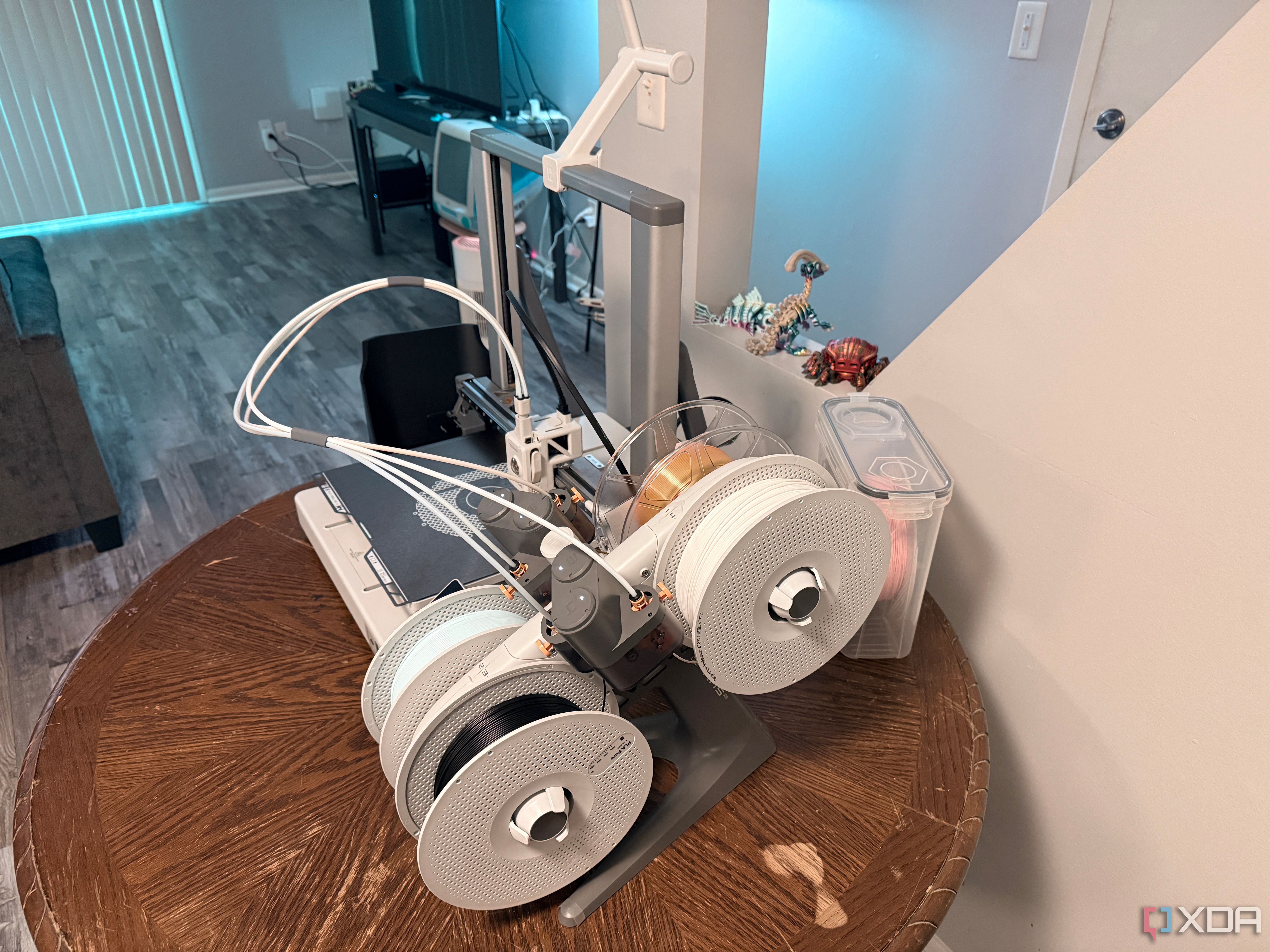
I spend a lot of time trying to shave a few dollars off 3D printing costs, and most of the obvious methods come with some penalty. Cheap filament can be fine, but I’ve also bought rolls that needed more drying, more calibration, or more patience than the price difference justified. Hardware upgrades can reduce waste, but they usually start with me spending more money and hoping the savings arrive later. Switching to filament refills was much less dramatic, and that’s exactly why it worked: I paid less for material I already trusted, stopped bringing home another plastic spool with every kilogram, and barely had to change how I print.
Related
These 5 simple tricks help me reduce filament waste and save money
One of the most frustrating aspects of 3D printing is wasting filament, so I’ve got some tips and tricks to help reduce that
Filament refills lower costs without changing the material
I’m still buying the filament I already know works
A refill is just a wound coil of filament without a permanent plastic spool around it. It usually arrives held together with several straps, and the whole bundle drops into a compatible reusable spool. I lock the spool halves together, make sure everything is seated properly, and only then remove the straps. The important part is that I’m still getting the same filament rather than gambling on a cheaper formula from an unfamiliar brand. That matters more to me than saving the absolute maximum amount per roll. I’ve bought inexpensive filament before and then spent enough time adjusting temperatures, drying it again, or running calibration prints that the bargain didn’t feel especially cheap anymore. Even when the roll eventually printed well, I had to figure out what it wanted first. With refills, I can keep buying a material I’ve already used and skip that whole round of doubt. The discount on one refill usually isn’t large enough to feel exciting at checkout. It may only be a few dollars compared with the same filament on a disposable spool, which doesn’t sound like much when you’re buying one roll. I noticed it more once I started replacing the colors I use constantly, especially the basic ones that rarely stay in storage for long. The savings didn’t require a spreadsheet or a six-month payoff period; the next kilogram simply cost less.
Reusable spools stopped wasting half of my shelf
The empty ones had become harder to justify keeping
The price difference got me interested, but the empty-spool problem made refills feel overdue. I print often enough that the empties build up quickly, and they take up an irritating amount of room for something that no longer has a job. I kept a few because reusable spools and cord holders seemed practical, and I was sure I’d find uses for the rest. I didn’t, or at least not enough uses to match the rate at which they accumulated. For a while, I had a stack of empty spools sitting on a shelf because throwing them away felt wasteful. Recycling wasn’t a clean answer either, since my community doesn’t really embrace it as much as I’d like. Cardboard spools solve part of the problem, but they raise concerns about dust, humidity, and how smoothly they run in certain filament systems. None of those issues is disastrous, but they’re all extra thought devoted to packaging I never wanted in the first place. I still keep more than one reusable spool because trying to share a single one across every material would get old fast. A few common colors stay mounted, and partially used refills need somewhere to live when I switch materials. Even with several reusable spools in rotation, the amount of dead plastic sitting around has dropped noticeably. The shelf now holds filament I can use instead of a row of empty containers I feel vaguely guilty about discarding.
Refills are easier to mess up than regular spools
Removing one strap too early can become a problem
Refills aren’t difficult to install, but they do punish carelessness more quickly than a normal spool. The coil needs to stay compressed while it’s inside the reusable shell, and the spool halves need to be fully locked before anything that holds the filament together comes off. Pull a strap too early, and the bundle can loosen before it’s contained. At that point, the few dollars saved on the refill stop feeling especially important while you’re trying to keep the filament from turning into a tangled mess. I was overly cautious the first few times because the process looked more fragile than it really was. That caution wasn’t entirely misplaced, though, since the order of operations does matter. I check the straps, place the coil flat, close the spool, and give the lock another look before removing anything. It only takes a minute, but it’s a minute I don’t need when opening a standard preassembled spool. Compatibility also requires more attention than the word “refill” suggests. Some coils are designed around a particular reusable-spool system, while others can work with adapters or printed spool designs. A printed spool still needs the right width, strength, and locking mechanism, especially if it’s going into an automatic material system. I’d rather confirm those details before ordering than discover that a cheaper refill doesn’t fit the equipment I planned to use it with.
A few reusable spools remove most of the friction
I stopped treating every refill as a spool swap
The workflow became much easier once I stopped trying to minimize the number of reusable spools I owned. My first instinct was to keep the setup as lean as possible and move refills around whenever I changed colors. That sounded efficient, but it would have turned every material change into a small storage problem. Keeping several compatible spools available costs a little upfront, yet it preserves most of the convenience I was used to.
Many filament refill systems support reusable spools you can print at home. Check the required dimensions and locking design of the refill before printing one, especially if you plan to use it in an automated material system.
I also don’t rush the refill installation anymore. The first few times, I treated it as something delicate that needed complete concentration, which made the process feel more involved than it was. Now I follow the same basic order every time and double-check the lock before touching the straps. It’s still an extra step, but it’s shorter than dealing with another empty spool after the roll is finished. Sticking with refill systems I’ve already tested has helped, too. I’m not buying random coils based only on price and then hoping they cooperate with whatever spool is nearby. Once I know a refill fits, feeds properly, and works with the storage setup I already have, I can reorder it without revisiting the whole compatibility question. That consistency is what turned refills from an experiment into the option I check first.
The small inconvenience keeps paying me back
The savings matter because they don’t require much sacrifice
There’s no way around the fact that a regular spool is more convenient when it comes out of the box. I can open the bag, load it, and move on without assembling anything or checking whether a reusable shell is free. That matters when I need a color immediately or when every spool I own already has filament on it. Refills ask me to plan slightly further ahead, even if that means keeping a few empty reusable spools on the shelf.
That extra step hasn’t been enough to push me back to disposable spools for materials I buy regularly. I’m not changing slicer profiles, accepting lower print quality, or spending time troubleshooting unknown filament to save money. I’m putting the same material onto a reusable holder and taking a little more care while opening it. Once the refill is loaded, the printer doesn’t care how the filament arrived.
Reusable spools have become part of my normal setup and installing a new coil no longer feels like a special task.
The longer I use refills, the less unusual the process feels. The reusable spools have become part of the normal setup, and installing a new coil no longer feels like a special task. What remains noticeable is the lower price and the absence of another empty spool when the filament runs out. Those are small benefits on their own, but they repeat every time I finish a kilogram.
Refills are now my first choice when they’re available
Filament refills haven’t made 3D printing a cheap hobby, and they’re still not available for every material or color I want. They have made one recurring purchase less expensive without asking me to tolerate worse filament or overhaul my workflow. The setup takes a little more attention, particularly when the coil first comes out of the package. After that, it prints exactly the way I expected it to. That’s why this has been the cheapest useful change I’ve made to my 3D printing setup all year. I didn’t have to buy a new machine, replace a working component, or convince myself that a questionable roll was good enough after enough tuning. I just stopped paying for another plastic spool every time a refill was available. The savings are modest, the waste is lower, and I no longer have to pretend I’m eventually going to find a brilliant use for a shelf full of empties.
Build Volume
256 x 256 x 256 mm
Printing Speed
1000 mm/s
Materials Used
PLA, PETG, ABS, ASA, TPU, Support for PLA, Support for PLA/PETG, Support for ABS, Support for PA/PET, PET, PA, PC, PVA; Carbon/Glass Fiber Reinforced PLA, PETG, ABS, ASA, PA6, PAHT, PPA, PET
Brand
Bambu Lab
Extruder Quantity
2
Extruder
Direct Drive (Primary), Bowden (Auxiliary)
Bambu’s X2D is a highly capable 3D printer that won’t break the bank.
Diterbitkan : 2026-07-11 19:31:00
sumber : www.xda-developers.com