
Best of Computex 2026: The most intriguing and innovative PC hardware

Summary created by Smart Answers AIIn summary:PCWorld highlights Computex 2026’s most innovative PC hardware, including Nvidia’s first PC CPU with RTX Spark chips, Intel’s Arc G3 Extreme processors for handheld gaming, and breakthrough display technologies.Key innovations include Samsung’s 4K 360Hz QD-OLED panels, Alienware’s 39-inch OLED gaming monitor, and Noctua’s maintenance-free carbon nanotube thermal pads launching September 2026.Despite rising AI-driven prices making PCs less accessible, standout affordable options emerged like Dell’s $599 XPS 13 and Acer’s Snapdragon-powered Aspire Go 15.
Yes, it’s a difficult time for PC enthusiasts. But PC innovation stops for no one.
That became strikingly clear the last couple times we’ve headed to Taiwan for Computex. Ostensibly the biggest PC show of the year, one where vendors proudly reveal the new wares inbound for the crucial back-to-school and holiday shopping seasons, Computex’s onslaught has felt muted the past couple of years – first due to the threat of tariffs in 2025, and then AI sucking all the air from the room during this year’s event.
Uncertainty breeds competition, though – and the PC kept its foot on the gas pedal at Computex 2026. From Nvidia’s debut PC CPU to Intel’s new gaming handheld hope to cheap laptops galore and a rush of eye-popping new monitor technologies, there was an abundance of certified bangers for nerds to salivate over.
Which reveals got us deeply, personally excited? This is the best hardware of Computex 2026. Giddy up.
Nvidia RTX Spark
Nvidia
There’s been some wild stuff coming out of Computex this year, but for my money nothing’s more exciting than Nvidia’s new RTX Spark chips. Yes, Nvidia is in the consumer CPU game now via a partnership with Mediatek. While they won’t start shipping in laptops and mini PCs until the fall, I think they’re going to make a huge splash upon arrival.Each sports a 20-core CPU, a Blackwell GPU with 6,144 CUDA cores (just like an Nvidia RTX 5070) and room for up to 128 GB of LPDDR5X memory, making for a serious powerhouse. Factor in the support for Nvidia’s DLSS 4.5 upscaling tech and I’m betting these slices of silicon could be a major shot in the arm for gaming on ultraportables, mini PCs and hopefully handhelds some day – though the initial focus is clearly on AI. – Alex Wawro
Microsoft Surface Laptop Ultra
Surface Laptop Ultras flanking a Surface RTX Spark Dev Box.Alaina Yee / Foundry
As someone who has used practically every Surface device Microsoft has ever produced, this was a no-brainer: the Surface Laptop Ultra revitalizes a lineup that has otherwise become stale. Inside and out, the Surface Laptop Ultra screams productivity — well, a new era of productivity, where agents work hand in hand with your eyes, brain, and fingers.
It’s a revolution for Surface, from the brand-new Nvidia RTX Spark Arm processor inside it to an entirely new mini LED display. Microsoft engineered the Ultra for multitasking between running AI models up to 120 billion parameters and general productivity applications, too. How does this all play out? We’ll find out this fall. For now, it’s all I can think about. – Mark Hachman
Samsung 4K 360 OLED panel
Samsung
Monitors have been improving at blistering speed this decade, but true display sickos – like yours truly – have been holding out for a no-compromises holy grail: 4K resolution at blistering 360Hz speeds, letting you have your visual fidelity cake and eat peak performance, too. The problem? The technology simply wasn’t there yet.
Now it is. Samsung – who makes many of the panels found in rival monitors as well – officially introduced the world’s first 4K 360Hz QD-OLED panel at Computex, spread across a roomy 32 inches. (If you bump the resolution down to 1080p, it hits 680Hz, but who wants to look at that?) VESA DisplayHDR True Black 600 certification means those darks can get dark for scintillating contrast ratios, too.
Now the wait begins. With Samsung unveiling the panel, expect to see it in high-end gaming monitors closer towards the end of the year – but don’t expect to find this bleeding-edge tech in displays going for under four figures anytime soon. – Brad Chacos
Dell XPS 13
Dell
I went into Computex 2026 wondering if the MacBook Neo would force PC vendors to play ball—but apparently, Dell already had long decided to play a similar game. Its revived XPS 13, which will feature a choice of Intel’s new Wildcat Lake processors or more powerful (but less power efficient) Panther Lake chips, is equipped to duke it out with Apple’s budget offering.Priced at $599 for students until November and $699 for the general public, this 13-inch notebook allows Windows users to buy new, affordable hardware without having to switch teams. And it sports useful premium features compared to the Neo, like a backlit keyboard and a touchscreen. (Sure, the Neo’s exterior is pretty, but you can’t see it in the dark.) As exciting as Nvidia’s beastly RTX Spark is, it won’t put modern technology into hands right now. Dell’s XPS 13 will. – Alaina Yee
Dell
Dell’s new XPS 13 hits the spot as a rare budget laptop that doesn’t feel budget. It packs an OLED display, an aluminum chassis, and all-day battery life thanks to Intel’s new Wildcat Lake processor. It’s Dell’s answer to Apple’s MacBook Neo, targeting the same price point and doing its best to match that experience in Windows style, complete with Retina-level 2560×1600 resolution on its 13.3-inch screen (about 225 PPI, impressive).Starting at $599 for students and $699 for everyone else, it clearly punches above its weight. But I’m cautiously optimistic here. We only have Dell’s word to go off so far—testing may reveal some quirks and deal-breakers, especially regarding that all-day battery life claim. And it starts with only 8GB of RAM and a 512GB SSD, which is tight for power users. Still, if all the other key specs pan out, this could be the ultimate daily driver for budget-conscious remote workers. That’s something to be excited about. – Joel Lee
Intel Arc G3 Extreme
Since the debut of “Panther Lake” CPUs at CES earlier this year, Intel has been talking a big game when it comes to handheld gaming. Sure, its predecessor Lunar Lake was a massive leap over Meteor Lake, but AMD has dominated this segment for so long Intel’s chip were more of a curiosity. No more.
At Computex, Intel launched a brand-new handheld-focused processor line dubbed Arc G3 Extreme. It looks ready to take down AMD’s handheld dominance — and Team bBue couldn’t be more excited. Intel’s Tom Petersen described the Arc G3 line as GPUs with CPUs attached (rather than the other way around) thanks to smart cuts and improvements to efficiency under the hood.
When it comes to performance, Intel is claiming a 44 percent average uptick in frame rates gen-over-gen, and a 42 percent average performance advantage compared to the AMD Ryzen Z2 Extreme at similar power levels. To add insult to injury, Intel claims that at 17 watts the G3 Extreme matches the Z2 Extreme at 35 watts – an utterly massive win in the power-constrained handheld space. – Adam Patrick Murray
MSI Claw 8 EX AI+
MSI leads the launch lineup of Intel Arc G3 Extreme devices and continues the company’s handheld journey from zero to hero. The team has gone back to the drawing board when it comes to ergonomics, and for such a large device, the MSI Claw 8 EX AI+ immediately feels fantastic in the hand. At the heart of this device is of course the Panther Lake-based Intel Arc G3 Extreme processor, which looks to take a drastic leap over the competing top end Ryzen Z2 Extreme that powers most high end handhelds on the market today. Despite the fact that the new Claw is still using last-generation’s IPS panel and it only comes in one color, there isn’t much to point out as a downside.
Even though we are possibly looking at the best handheld on the market, I’m also bracing for impact when it comes to pricing, as it has not been locked down. The MSI Claw 8 EX AI+ will definitely come in over $1500, but we aren’t sure how close to $2000 it will reach — and that will be a huge question mark until closer to launch later this month. – Adam Patrick Murray
Long live AM5
Foundry
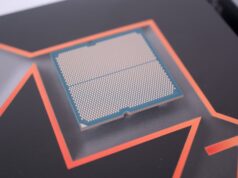
While AMD’s older AM4 chipset has kicked around longer than anyone ever expected, the fate of its successor always felt murkier. (If you can even call it a successor, given that AM4 hasn’t taken its retirement yet—and it doesn’t appear that AMD will force that any time soon.) Team Red only nudged AM5’s life out in small increments, first pledging a guarantee of 2025 back in December 2023, and then again another of 2027+ in June 2024.Now AM5 has gotten another official extension during this year’s Computex, this time to 2029. Cynics may interpret this news as a lazy move on AMD’s part, as well as one that stifles innovation. Me? I believe it’s better that AMD isn’t breaking AM4’s precedent. Right now DIY PC builders must contend with slower innovation and higher prices. If they can save cash by dropping in a new CPU into an existing motherboard, I’m all for it. – Alaina Yee
Acer TravelMate P6 14 AI
Computex favors the powerful, the extreme, and the outrageous. I chose something practical instead: the Acer TravelMate P6 14 AI, perfect for someone traveling to Taiwan for a trade show like Computex! The appeal is summed up in just a few short words: 2.2 pounds, and 30 hours of battery life. Thin, light, long-lasting — that’s what I like in a travel laptop.
Inside the laptop is Intel’s Core Ultra Series 300 (Panther Lake) chip, with an option for the Core Ultra X7 368H with Intel’s powerful integrated Xe3 GPU behind a 14-inch 2,880 x 1,800 OLED or IPS touchscreen. That’s a lot of bling for a productivity machine. It will be one to watch when it launches in August. – Mark Hachman
Alienware 39 5K OLED Gaming Monitor AW3926QW
Dell
Alienware monitors always impress, but the Dell subsidiary is on a heater in 2026. Mere weeks after unveiling a game-changing $350 OLED monitor, the company is back at it with the more-than-a-mouthful Alienware 39 5K OLED Gaming Monitor AW3926QW.
Everything about this beast is over the top – it’s a 39-inch ultrawide panel with a pixel-packed 5120×2160 resolution and 165Hz refresh rates (330Hz at 1080p) on top of the contrast-y OLED gaming goodness you know and love.
But Alienware’s new monitor could be good for more than gaming – a rarity in the OLED world. It’s powered by an LG panel with the company’s new “5K RGB stripe tandem OLED” technology. I saw LG debut RGB Stripe at CES and the results were breathtaking – the technology largely eliminates the distracting text ‘fringing’ you can see in fine, thin details on OLEDs, particularly text.
As a dude who writes and spreadsheets all day and games all night, I can’t wait to see this beast in action. Yo Dell, send me one to review! – Brad Chacos
Noctua NT-CP1
Carbice
Noctua’s NT-CP1 thermal pad kind of slid in under the radar this year at Computex, but it’s actually pretty dang exciting tech. The company partnered with Carbice to design a carbon nanotube thermal pad for the retail market. You may not have heard of them, but Carbice already makes thermal pads for satellites, aerospace, and pre-built PCs—the company partnered with AMD to supply pads with the just re-released Ryzen 7 5800X3D.The addition of carbon nanotubes here is really clever. The nanotubes conform to the microscopic surface of a CPU’s IHS over time, improving conductivity with each thermal cycle. It also comes with an aluminum backbone sitting between the nanotube layers, and a nanoscale polymer coating on the surface. That might sound like sci-fi to most of us, but practically it means that unlike thermal paste, this pad lasts the lifetime of your CPU with no maintenance required.The Noctua NT-CP1 is sized to fit AM5 and AM4 AMD Ryzen CPUs, with a surface area that perfectly matches the IHS of chips in both sockets. Noctua is set to help Carbice develop future thermal pads, which—fingers crossed—may point to an Intel version of the NT-CP1 down the line.The product is set to launch in September 2026. I can’t wait to see what the benchmarks show when this thing is released. I for one, cannot wait to be rid of thermal paste once and for all. – Sam Singleton
Asus ROG Xbox Ally X20 Bundle
Asus
The ROG Xbox Ally X20 is ASUS’s 20th anniversary edition of the ROG Xbox Ally X handheld. And I can already hear handheld fanboys and collectors jumping for joy.The internals for the X20 are set to stay the same but the chassis is tricked out with a translucent black finish accented by gold throughout. The big upgrade over last year’s model though is the display: a gorgeous 7.4-inch 1080p 120Hz OLED panel with up to 1,400-nit peak brightness, full Dolby Vision support, and a 0.2ms response time.And if that’s not enough, this new bundle includes the ROG Xreal R1 Edition 20 AR glasses. They connect via USB-C and deliver a virtual 171-inch screen, a 240Hz refresh rate, and native 3DoF head tracking via micro-OLED. This new X20 also adds TMR joysticks for better drift resistance, a transforming D-pad with eight-way control, and redesigned flush face buttons.Pricing and an official launch date for the bundle haven’t been confirmed yet. Although considering the standard Ally X costs around $1,000 (not on sale) and the glasses alone run $850, expect the bundle to land near or above $2,000. Sure, that price may be hard to swallow, but I have to admit that this thing looks incredible. – Sam Singleton
Acer Aspire Go 15
Even though the biggest news out of Computex was the RTX Spark, I find myself more excited about something far more understated: the Acer Aspire Go 15, which comes with an entry-level Snapdragon C processor. Affordable, efficient laptops feel more important than ever because of rising memory prices. People need more accessible options, especially as Computex continues to push high-end performance hardware, which is why I’m happy to see Acer jumping on that train. – Ashley Biancuzzo
Nvidia OpenShell
No, it’s not a new terminal program, nor is it an open-source vibe-coding app. Developed in partnership with Microsoft, OpenShell is Nvidia’s stab at making AI agents safe–well, safer–for PC desktops.
Nvidia OpenShell offers three key security layers: sandboxing for each agent and sub-agent, allowing them to tinker without mucking directly with your system files; a detailed and customizable set of rules determining what your agents can and cannot do; and a privacy gateway that keeps your most sensitive tasks on your local system while stripping away personal details from anything sent to the cloud. Think of it as OpenClaw with some heavy-duty guardrails included–in theory, anyway.
Currently in early preview, OpenShell is slated to arrive in the first wave of RTX Spark-powered laptops coming this fall. – Ben Patterson
Dell XPS 13, yet again!
Dell
Normally, the headline grabbers of a show like Computex are the products with the sickest, most cutting-edge specs and design. But these aren’t normal times, and for me, one of the most exciting pieces of kit announced at Computex 2026 was the return of the Dell XPS 13, catering to budget buyers.
With Apple’s MacBook Neo squarely in its sites, the XPS 13 is the sorely needed Windows-based budget-laptop challenger. – Katherine Stevenson
Despair
If I could sum up Computex in a single word, it would be “despair.” Thanks to companies rushing to cash in as they sate the “AI” bubble, regular users are being left with two choices: make huge cuts and compromises for an affordable PC, or spend huge amounts to get a mid-range or premium option. And all of those are more expensive than they were just a year ago.
Companies like Dell and Acer are trying to match the MacBook Neo, but can’t — prices start at $100 more expensive, even with newer, less-powerful chips from Intel and Qualcomm. Handhelds, once an entry-level option for PC gaming, are now debuting exclusively above the $1000 mark.
For most of this century desktops and laptops have been, if not exactly cheap, then at least accessible to most people. I think that time is rapidly drawing to a close. Full PCs (as opposed to phones or tablets) are going to become a major expense you have to plan for, or something you have to work around in absentia. It’ll be the same relationship a lot of people have with cars.
Despair. Yup, that about sums up 2026 for me. Oh, and in the PC market too. – Michael Crider
Diterbitkan : 2026-06-04 12:21:00
sumber : www.pcworld.com