
I thought my RTX 3080 was still king, but DLSS 4.5 in Forza Horizon 6 opened my eyes
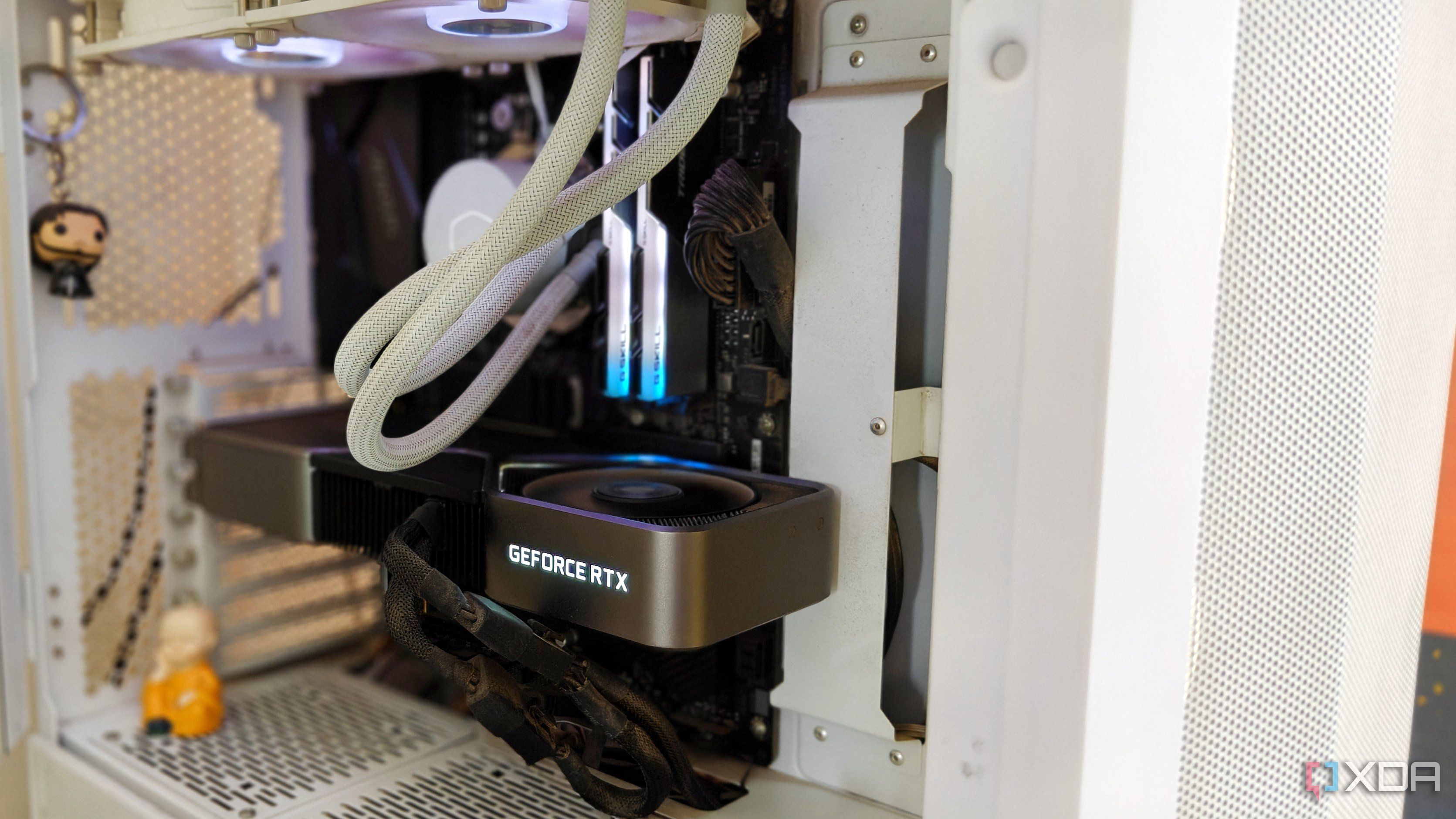
For the first few years of owning the RTX 3080, I could confidently claim to have one of the fastest GPUs in the world. After all, I got it before the RTX 40 series launched in late 2022. With time, however, the RTX 3080 began falling behind, thanks in no small part to its 10GB VRAM capacity and the lack of official frame generation support. Still, my experience with the latest AAA games was more than decent, all things considered. Titles like Cyberpunk 2077, Alan Wake 2, Black Myth: Wukong, and Indiana Jones and the Great Circle never let me feel that I had an outdated GPU. When Nvidia launched DLSS 4.5 for every RTX GPU, I was excited to see what it could do for my “aging” card. While it solved many of the problems of DLSS 4 in terms of image quality and stability, the FPS hit was too much to bear, especially with ray tracing turned on. I was forced to revert to the default DLSS 4 to maintain playable framerates. It seems the RTX 3080 is finally at the end of the line as far as high-end gaming experiences go.
Related
Over 40% of Steam gamers are still using RTX 30 and 40 GPUs, and DLSS is a big reason why
The RTX 30-series is aging better than any GPU generation before it
My 5-year-old GPU was cruising in AAA games
At least until this year
Only a few months ago, I wrote about how the RTX 3080 still doesn’t let me down in AAA games. It was launched over 5 years ago, and despite being locked out of many of Nvidia’s latest DLSS features, it performed well enough in the latest titles. Now, my baseline for a good gaming experience is to play a game without major compromises. That means keeping ray tracing enabled if it genuinely makes the world visually stunning, and keeping the framerate reasonably above 60 FPS. This metric was achievable even in recent titles like Black Myth: Wukong, albeit with medium ray tracing and DLSS Performance enabled. With some undervolting, I was able to give the minimum FPS a slight boost, preventing too many stutters. For the majority of my time with the RTX 3080, triple-digit framerates didn’t matter to me. I don’t play online multiplayer games a lot, and 70–80 FPS at High-Ultra settings is all I need in single-player titles. The RTX 3080 did that in almost everything I threw at it, until I played Forza Horizon 6.
Related
DLSS 4.5 is expensive, but it’s the best thing to happen to my aging RTX PC
The upside is remarkable, but the cost isn’t equal for all.
DLSS 4.5 had me excited, but it proved a bit too much for my RTX 3080
The VRAM tax strikes again
Forza Horizon 6 has been the only game I have played more than once in the last year or so. It has single-handedly motivated me to use my gaming PC for, well, gaming. However, when I tried to enable ray tracing reflections and ray tracing GI, the game promptly told me that my GPU wasn’t equipped for that. I was barely able to stay above 60 FPS, even with DLSS Performance and a few other graphical tweaks. At the end, I just had to fall back to Screen Space reflections and GI, keeping everything else at Ultra or Extreme. That’s when I thought of trying out the new DLSS 4.5 presets via the Nvidia app. The transformer model promised better motion handling and artifact management, and Preset M was supposed to be less taxing than Preset L, so I wasn’t too worried about my 10GB framebuffer. So, I enabled the override in the Nvidia app, and launched the game with high hopes. I started with Preset L, since I wanted to see how bad the FPS drop would be with the better visuals. With medium ray tracing reflections and ray tracing GI enabled, and DLSS set to Performance in-game, I was only getting around 45 FPS, which was considerably worse than what I got with DLSS 4 (Preset K). Naturally, I switched to Preset M for a bump in the FPS, but I could only get to around 55 FPS. It was way better than 45 FPS in terms of the percentage jump, but it was still not enjoyable. The game clearly showed me that the VRAM consumption exceeded the available video memory my GPU had, and the game also told me in so many words that the insufficient VRAM was affecting the performance. I tried dropping to Ultra Performance in the graphics settings, but that resulted in too much artifacting, especially the road textures becoming pixelated and muddy. Nvidia’s DLSS 4.5 presets have brought great advancements to their upscaling stack, but they also come with a significant VRAM tax that can be too much for older RTX 30 and RTX 20 series GPUs. I found that in Forza Horizon 6, which happens to be one of the most optimized new titles. I can only imagine how my RTX 3080 will fare in games with worse optimization.
Released
May 19, 2026
ESRB
Everyone / Mild Lyrics, Users Interact, In-Game Purchases
Developer(s)
Playground Games
Publisher(s)
Xbox Game Studios
Related
Most gamers aren’t actually using DLSS 4.5’s new transformer model — here’s why and how to fix it
I wouldn’t go with Nvidia’s recommended defaults.
I have to make do with DLSS 4 for now
As do many other RTX 30 series owners
After switching to the default upscaler in the Nvidia app (DLSS 4 Preset K) and Screen Space reflections and GI in the game, I was able to get around 90 FPS with DLSS Performance. The reflections weren’t as stunning without ray tracing, but the game did not look bad by any means. Forza Horizon 6 is a great-looking title, ray tracing or not, and if the choice is between 60 FPS with prettier visuals and 90 FPS without, I’ll always choose the latter. It’s still a compromise on the visual front, but only a small one. While I concluded that DLSS 4’s Preset K was still the better model for my older GPU, it couldn’t do anything to allow me to enjoy ray tracing in the game. The RTX 3080 was an anomaly by Nvidia, providing a massive improvement over its predecessor without an obscene price tag to go with it. I was fortunate not to pay scalper prices, and was able to enjoy many years of gaming with it. It’s still a great card if I only let go of ray tracing. In most games, I can absolutely do that, but not in those titles where the technology truly shines. Forza Horizon 6 is one of those few, so it hurts that my GPU is finally too old for it, especially when an upgrade is out of the question. The market has been terrible for more than half a year now, and the RTX 5080, which was my intended upgrade, costs at least $1,400 here in India.
The VRAM situation with many other RTX 30 series cards will similarly affect other gamers as memory requirements increase. Whether it happens due to more advanced games or better upscaling models, gamers will continue to see the negative effects of insufficient VRAM. The 10GB framebuffer on the RTX 3080 is low, but even 12GB cards will start to feel the pinch as time goes on. And the less said about 8GB VRAM GPUs, the better.
7.5/10
Memory Clock Speed
1750MHz
Architecture
Blackwell
Process
5nm
Shader Units
4608
Related
Forget VRAM — these 5 GPU trends are way more disturbing
It’s not looking good for gaming GPUs, and it might get worse
It’s crazy that a 5-year-old high-end GPU is getting obsolete
I know that calling the RTX 3080 obsolete can be considered an overstatement by many gamers, but it fits the bill according to my definition. I’m no longer able to enjoy the latest titles at 60+ FPS without a significant visual downgrade, and that’s exactly when I like to upgrade my GPU. Of course, I will have to stick to my RTX 3080 for a few more years, since the market is in a pretty bad shape right now.
Diterbitkan : 2026-06-01 18:00:00
sumber : www.xda-developers.com